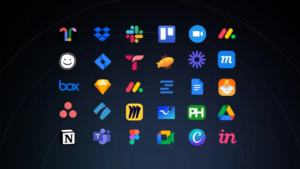
Building an income stream from home, whether through freelancing, e-commerce, content creation, or affiliate marketing, depends heavily on the tools you use to run it. Your laptop or smartphone effectively becomes your office, and the apps installed on it determine how fast you can take on new clients, how professional you look to people who have never met you in person, and how much of your hard-earned foreign currency actually survives the journey into your local bank account.
This matters because a growing number of Nigerians now earn meaningful income online, but many lose money or credibility unnecessarily simply by using the wrong tools, or no structured tools at all. Relying on WhatsApp and a personal bank account to run a freelance business works for a while, until a client questions your professionalism, a transfer fee eats a third of your payout, or a scam disguised as an opportunity catches you off guard.
This guide covers the specific tools Nigerian digital earners rely on most, organized by what each one actually solves, plus a practical seven-step roadmap for anyone starting completely from zero. By the end, you will know exactly which tools matter for your situation, what they cost, and how to avoid the common mistakes that slow beginners down.
Why Your Tool Stack Matters More Than You Think
It is tempting to treat tools as an afterthought, something to figure out once the money starts coming in. In practice, the order matters less than getting the basics right early.
A freelancer who pitches clients from a personal Gmail account and a personal WhatsApp number is communicating, often unintentionally, that this is a side hobby rather than a business. A freelancer who receives international payments through a standard Nigerian bank account, rather than a platform built for cross-border payouts, often loses a meaningful percentage of every payment to conversion fees and unfavourable rates without realizing how much it adds up over a year.
None of the tools below is mandatory to start earning. But each one solves a specific, recurring problem that Nigerian digital earners run into repeatedly, and knowing about them before you hit that problem saves you both time and money.
Essential Tools for Nigerian Digital Earners
Professional Communication: PressOne Africa
Mixing personal calls with client and business inquiries creates a chaotic workflow and can quietly undermine how seriously clients take you. PressOne Africa provides dedicated virtual phone lines, both local and international, that run entirely over internet data rather than your SIM. This lets you handle client onboarding, customer support, and freelance inquiries professionally from your own smartphone, without ever exposing your personal number.
This matters most once you start working with multiple clients at once. A dedicated business line keeps client communication organized, lets you set working hours that do not bleed into your personal life, and signals legitimacy to clients, evaluating whether you run a real operation.
Global Payment Gateways: Payoneer, Grey, and Geegpay
Earning in foreign currencies like USD, GBP, or EUR is one of the biggest financial advantages of working online, but only if you can actually receive that money efficiently. Platforms like Payoneer, Grey, and Geegpay let Nigerian freelancers and digital marketers set up international virtual bank accounts, making it possible to receive payouts from foreign clients or platforms like Upwork and Fiverr quickly and at a meaningfully lower cost than routing payments through traditional Nigerian banking channels.
The practical difference shows up most clearly on larger payments. Traditional bank wire transfers from abroad often involve multiple intermediary banks, each taking a cut, plus a less favourable exchange rate applied at the final conversion. Payment platforms built specifically for freelancers and remote workers typically offer more transparent fee structures and better rates, which means more of what you earn actually reaches you.
Graphics and Branding: Canva
You do not need to master complex design software like Photoshop to produce professional-looking visuals. Canva’s drag-and-drop system lets you design social media graphics, client proposals, presentation decks, and YouTube thumbnails in minutes, using templates built by actual designers rather than starting from a blank canvas.
For freelancers and content creators, this matters beyond aesthetics. A polished proposal or media kit built in Canva often makes the difference in winning a client pitch against a competitor who sent a plain text email.
Writing and Polishing: Grammarly
Clear, error-free communication is often the deciding factor in winning global gigs, particularly for clients who cannot meet you in person and are judging your professionalism almost entirely through written messages. Grammarly works in the background across email, documents, and browser-based platforms to catch typos, fix grammatical errors, and refine your tone, helping ensure your emails, blog posts, and pitches read as polished and intentional rather than rushed.
Content Management: Google Docs and Sheets
These free, cloud-based tools remain some of the most practical options available for collaboration. You can draft content, track affiliate links, manage client project timelines, and organize business expenses from any device, with changes saved automatically and shareable instantly with a client or collaborator.
Workflow Organization: Notion
Notion functions as a highly customizable digital workspace. Content creators and entrepreneurs commonly use it to build content calendars, map out business strategies, and track daily administrative tasks within a single unified system, rather than scattering this information across multiple apps and notebooks.
Mobile Video Editing: CapCut and InShot
If your income depends on video content for platforms like TikTok, YouTube, or Instagram Reels, CapCut and InShot are reliable mobile-friendly editors. Both provide professional-grade transitions, captions, and effects without requiring a high-end computer, which matters significantly for creators working primarily from a smartphone.
Research and Brainstorming: ChatGPT
AI tools genuinely speed up creative and administrative workflows when used deliberately. ChatGPT can help generate content outlines, brainstorm video concepts, draft blog post structures, or work through a headline when you hit a creative wall. Treat it as a starting point for your thinking rather than a finished product, since client work still needs your own judgment, voice, and fact-checking applied on top.
Task Tracking: Trello and ClickUp
These project management tools provide visual dashboards that map out your projects clearly. They help independent freelancers track project stages, monitor client feedback, and meet deadlines without everything living only in your head, which becomes increasingly important as you take on more than one client at a time.
Currency Exchange: Wise
Wise is widely used for converting foreign earnings into Naira using transparent, competitive exchange rates. For anyone earning consistently in a foreign currency, the difference between a transparent mid-market rate and a marked-up bank rate compounds significantly over months of payouts, making this one of the higher-impact tools on this list despite being one of the simplest to set up.
A Beginner-Friendly Roadmap to Online Income
Knowing which tools exist is only half the picture. Here is a structured, seven-step path for anyone starting from zero, designed around the most common reasons beginners stall out before earning their first payout.
Step 1: Define Your “Why”
Before downloading a single app, write down your core motivation. Whether your goal is escaping underemployment, funding your education, or supporting your family, keeping that reason visible matters once the initial excitement fades and the work gets repetitive. Building sustainable online income is a gradual process, not an overnight win.
Step 2: Select a Single Speciality
The most common mistake beginners make is trying to do everything at once: a little freelance writing, a little dropshipping, a little affiliate marketing, none of it pursued seriously enough to gain traction. Evaluate your natural strengths honestly and commit to one path to start.
- Strong writing or language skills? Focus on freelance writing, translation, or blogging.
- Enjoy teaching or explaining concepts clearly? Explore online tutoring or educational content creation.
- Interested in commerce and systems? Look into digital product sales, dropshipping, or affiliate marketing.
You can branch out into additional income streams later, once your first one is actually generating consistent results.
Step 3: Use High-Quality Training Resources, Free First
You do not need to pay for expensive masterclasses before earning your first Naira. Start with free, high-value tutorials on YouTube or established blogs in your chosen field. Once you start earning consistently, reinvesting a portion of that income into structured, premium courses on platforms like Udemy or Coursera becomes a far easier decision, because you are funding it with money the skill itself has already generated.
Step 4: Protect Your Time
Consistency comes from structure, not motivation. Even while balancing a full-time job or NYSC service year, dedicating one uninterrupted hour daily to your online work compounds meaningfully over weeks and months. Block this time on a calendar app and treat it with the same seriousness as a scheduled work shift, not as something to fit in if the day allows it.
Step 5: Establish Your Digital Profile
A clean, professional online identity builds trust with potential clients before you ever speak to them directly.
- Create a dedicated email address using a professional format, such as firstname.lastname@email.com.
- Set up a virtual business phone number to separate work communication from personal messages.
- Build out a LinkedIn profile or a simple portfolio site that clearly showcases what you can actually do.
Step 6: Focus on the First Small Win
Do not wait for a perfect logo, a polished website, or a fully built-out portfolio before starting. Send the pitches, publish the content, or apply for the entry-level gigs today, with whatever you currently have. Securing your very first payout, no matter how small, creates a real psychological shift that proves the entire process actually works for you specifically, which makes the second and third payout considerably easier to pursue.
Step 7: Conduct Weekly Reviews
Set aside fifteen minutes every weekend to review your progress honestly. Track how many pitches you sent, what content performed well, and where you ran into friction. Adjust your approach based on these patterns rather than repeating the same week indefinitely and hoping for a different result.
Costs to Expect
Most of the tools above offer functional free tiers, which is part of why this path is genuinely accessible to beginners with limited starting capital. That said, a few realistic cost considerations are worth planning for.
- Payment platforms like Payoneer and Wise typically charge a small percentage fee per transaction or withdrawal, generally lower than traditional bank wire fees, but not zero.
- Premium software tiers (Canva Pro, Grammarly Premium, ClickUp’s paid plans) unlock additional features but are rarely necessary in your first few months. Free tiers cover most beginner use cases.
- Paid courses are an optional, later-stage investment, not a prerequisite for starting.
- Data costs deserve more attention than most guides give them. Several of these tools, particularly virtual phone lines and video calls, run on internet data rather than airtime, so factor a reliable data plan into your monthly budgeting from the start.
Mistakes to Avoid
- Trying to use every tool on this list at once. Start with one payment platform and one or two productivity tools. Add more only once you feel an actual gap in your workflow.
- Skipping a professional payment platform until “the money is bigger.” Fee differences compound from the very first payout, not just the large ones.
- Using a personal phone number for client work indefinitely. This becomes harder to unwind the longer you wait, especially once existing clients are used to reaching you that way.
- Paying for premium tool tiers before testing the free version. Most beginners do not exhaust what the free tier offers before considering an upgrade.
- Treating AI tools like ChatGPT as a finished-product generator. Client work still requires your own editing, fact-checking, and voice on top of any AI-assisted draft.
Notes to keep
- Your tool stack directly affects how professional you appear to clients and how much of your earnings you actually keep, particularly around payment fees and exchange rates.
- A dedicated virtual phone line and a cross-border payment platform are two of the highest-impact early investments for anyone earning from foreign clients.
- Free tools (Google Docs, Canva, ChatGPT) cover most beginner needs; premium tiers are worth considering only once you hit a genuine limitation.
- Picking one speciality and committing to it tends to outperform spreading effort across several income streams at once.
- Consistency, built through small daily time blocks and honest weekly reviews, matters more long-term than any single tool or platform.
- Plan for transaction fees, currency conversion costs, and reliable data access as real, ongoing costs of running an online income stream.
The tools themselves are not what make someone successful at earning online. Consistency, a clearly chosen speciality, and a willingness to start before everything feels perfectly ready matter far more. What the right tools do is remove friction: they make you look credible to clients who have never met you, protect more of your earnings from unnecessary fees, and free up time you would otherwise spend on disorganized admin work.
Start small. Pick one payment platform, one or two productivity tools that match your chosen speciality, and the roadmap above. Add complexity only once you genuinely need it, not because a list like this one suggests you should have it all from day one.
Frequently Asked Questions
Do I need to pay for any of these tools to start earning online? No. Most of the tools listed, including Canva, Google Docs, ChatGPT, and the free tiers of Trello, Notion, and Grammarly, are sufficient for a beginner. Paid upgrades become worth considering only once you hit a specific limitation in the free version.
Which payment platform is best for Nigerian freelancers: Payoneer, Wise, Grey, or Geegpay? There is no single best option for everyone. The right choice depends on which platforms your specific clients or freelance marketplaces support, the fee structure for your typical payment size, and how quickly you need access to funds. It is common for active freelancers to use more than one platform depending on the client.
How much can a beginner realistically earn online in Nigeria? Earnings vary widely based on skillset, niche, and consistency. Many beginners earn modest amounts in their first few months while building a portfolio and reputation, with income scaling meaningfully as speed, quality, and client trust grow over time. Treat early figures as the floor, not the ceiling.
Is it safe to share my BVN or bank details with these platforms? Established, well-known platforms like Payoneer and Wise require standard verification for regulatory compliance, which is normal. The risk lies in sharing this information in unverified chat groups, with unknown individuals, or with platforms you have not independently confirmed are legitimate.
Do I need advanced technical skills to use these tools? No. Every tool listed here is built for non-technical users, with intuitive interfaces designed specifically so beginners do not need a design or programming background to use them effectively.
How do I avoid losing money to currency conversion fees? Compare the rates and fees of dedicated platforms like Wise against your standard bank’s rates before converting large amounts. The difference is often small per transaction, but adds up meaningfully across a year of regular payouts.
Should I pick a niche before or after learning a skill? Generally, develop a baseline skill level first, then narrow into a niche as you start applying it. Trying to pick a hyper-specific niche before you have any practical experience often leads to unnecessary overthinking and delayed starts.
What is the single most important tool to set up first? There is no universal answer, but for anyone planning to work with foreign clients, setting up a reliable payment platform early tends to matter most, since it directly affects how much of your income you actually retain from your very first payout.

[…] For a deeper look at the specific tools that make this transition smoother, from professional phone lines to payment platforms and productivity apps, see our guide on the best online tools for Nigerians earning online. […]