
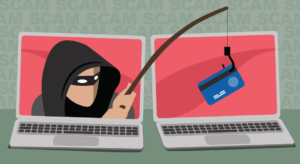
The desire to earn a legitimate income online is not naive. It is a reasonable response to a real opportunity. Nigeria has a growing class of freelancers, digital creators, virtual assistants, and online entrepreneurs who are building sustainable careers entirely through the internet. The problem is that for every genuine opportunity in that space, there are several fraudulent ones designed to look exactly like it.
Scammers have become more sophisticated, not less. They use professional-looking websites, borrow the names and logos of legitimate companies, and lean heavily on emotionally charged language like “earn daily,” “work from anywhere,” or “no experience needed.” For someone who genuinely needs income, these messages hit exactly the right pressure points.
This guide covers how to identify online scams before they cost you money, how to protect your personal and financial data, and how to build the kind of focused, consistent approach that actually produces income over time.
How to Recognize an Online Scam Before It Costs You
Fraudulent job offers and money-making schemes almost always leave visible traces. The difficulty is that desperation and excitement can make those traces easy to miss. Here are the specific signals worth treating as hard stops.
They Ask You to Pay Before You Earn
This is the clearest and most reliable indicator that something is fraudulent. Legitimate employers pay you. They do not ask you to pay them. Any request for a “registration fee,” “mandatory training cost,” “system activation charge,” or “processing payment” before you begin work is a scam, regardless of how official the language sounds or what is promised in return.
This tactic works because the amounts requested are often small enough to feel justifiable. A ₦3,000 registration fee seems reasonable if the promise is ₦50,000 per week. That calculation is exactly what the scammer is banking on.
The Job Description Is Deliberately Vague
Legitimate remote work listings describe specific tasks, clear deliverables, defined platforms, and transparent pay structures. A freelance writing role will name the content types expected, the word count range, and the payment rate per piece. A virtual assistant role will list the software you will use and the hours required.
Scam listings stay broad on purpose. “Be your own boss,” “earn money from your phone,” or “help us grow our online community” describe nothing. The vagueness is intentional because a specific job description can be verified and scrutinized. A vague one cannot.
The Recruiter Has No Verifiable Identity
Pay close attention to how a recruiter or company contacts you. Watch for these specific signals:
- Outreach arrives from a generic Gmail, Yahoo, or Hotmail address rather than a corporate domain
- The company’s website URL contains spelling variations of a known brand name
- The website lacks “https” encryption in the address bar
- The company has no presence on LinkedIn, no reviews on Glassdoor or Trustpilot, and no Google search results that match what they claim to be
- The phone number provided is a personal line rather than a business contact
A real company that is hiring has an internet footprint. If a search turns up nothing credible, that absence is information.
You Are Hired Without Any Evaluation
No legitimate employer hires without some form of assessment. Even informal remote roles typically involve an application, a brief conversation, a skills test, or at minimum a contract. If someone offers you a position immediately after you express interest, with no interview, no documentation, and no discussion of expectations, you are almost certainly being set up for a scam.
Legitimate vs. Fraudulent Opportunities: A Direct Comparison
| Feature | Legitimate Online Work | Online Scam |
|---|---|---|
| Vetting process | Requires interview, test, or portfolio review | Instant hiring with no screening |
| Job expectations | Clear deliverables and pay structure | Vague or undefined duties |
| Payment direction | They pay you | You pay them first |
| Company reputation | Verifiable on third-party review sites | No credible digital footprint |
| Contract | Written agreement before work begins | No documentation |
| Contact information | Corporate domain and official channels | Generic email or messaging app only |
How to Protect Yourself Before, During, and After Applying
Recognizing the red flags is the first layer of protection. The second is building deliberate habits around how you handle your personal information and digital identity.
Verify Every Opportunity Independently
Before investing any time or attention in an opportunity, spend five to ten minutes on basic verification. Search the company name on Trustpilot, Glassdoor, and LinkedIn. Look for reviews from people who have actually worked with or for the company. Search the company name alongside the word “scam” to see if there are any documented reports from other Nigerians who encountered the same offer.
If a platform claims to connect Nigerian freelancers with international clients, look for video testimonials, social media activity with genuine engagement, and a physical address that can be confirmed. The time spent verifying before applying is always less than the time spent recovering from a scam afterward.
Guard Your Sensitive Personal Data
Never provide any of the following on a job portal, application form, or chat platform unless you have independently verified the company and are at a formal onboarding stage:
- Bank Verification Number (BVN)
- National Identification Number (NIN)
- Banking PINs or passwords
- ATM card details
- Date of birth combined with home address
Legitimate employers in Nigeria do not need your BVN to consider your job application. If a platform requests this information as part of the initial sign-up or application process, leave immediately.
Use a Separate Contact Channel for Online Work
One of the more practical and underused protective steps is maintaining a communication channel that is completely separate from your personal number. A virtual business phone number allows you to communicate with clients, run ads, verify accounts, and receive business calls without exposing your private SIM to unsolicited contact, spam, or phishing attempts.
This separation also helps if a platform you have signed up with is later compromised. Your personal number and the people saved in your personal contacts remain unaffected.
Secure Your Devices and Accounts
Use strong, unique passwords for every platform you use for online work. Enable two-factor authentication wherever it is offered, especially on email accounts, which are often the first target in an account takeover attempt. Be cautious about clicking links in WhatsApp messages or emails promising income opportunities, even if they appear to come from someone you know, as account hijacking is a common way these messages spread.
The Trap That Derails More People Than Scams: Shiny Object Syndrome
There is a pattern that affects a large number of Nigerians trying to build online income that is not technically a scam but does comparable damage to financial progress: jumping from one trending opportunity to another without ever staying long enough to build real skill or income.
One month it is crypto trading. The next it is dropshipping. Then affiliate marketing, then content creation, then forex signals. Social media amplifies this cycle because the people most visible online are those showing the results, the payouts, the lifestyle, not the 18 months of consistent unglamorous work that preceded them.
The result is that many people spend years in motion without building anything durable. They never develop depth in any single area. Algorithms and clients both reward expertise that only comes with sustained practice. Shallow familiarity with ten fields produces less income than genuine competence in one.
Desperation also makes you vulnerable. Someone who has already tried and abandoned five income strategies in six months is exactly the kind of person a well-worded scam targets successfully.
How to Break the Pattern
Choose one path and commit to it for a minimum of three to six months. Whether that is freelance writing, virtual assistance, social media management, graphic design, or digital product sales, the selection matters less than the commitment. Every path requires sustained effort before it produces consistent returns.
Set a concrete first goal, not a vague one. “Make money online” is not a target. “Earn my first ₦10,000 from a verified client within 60 days” is a target. Small, specific wins build genuine confidence and prove the model works before you invest further time and resources.
Follow educators who show the process, not just the results. There is a meaningful difference between a creator who documents their actual workflow, including the slow days, the rejections, and the mistakes, and one who primarily posts screenshots of large payouts. The first type of content produces learnable insights. The second primarily produces comparison and anxiety.
For a broader look at where to start and what platforms actually pay Nigerians reliably, the Beginner’s Guide to Earning Money Online covers the most accessible entry points in detail.
Building a Consistency Routine That Survives Real Life
Most people who fail to build online income do not fail because they lack skill or because every opportunity turned out to be fraudulent. They fail because inconsistency compounds. A week of strong effort followed by two weeks of nothing produces no compounding benefit. Inconsistency is usually not a motivation problem. It is a systems problem caused by burnout, irregular internet access, unclear priorities, and no defined structure.
Design for Specificity, Not Ambition
Vague intentions produce inconsistent action. “Work on my freelancing career” is easy to defer indefinitely. “Send two tailored pitches every weekday morning between 9:00 and 10:00 AM” is either done or not done. The more specific the action, the harder it is to rationalize skipping it.
Attach New Habits to Existing Ones
Habit stacking is one of the most reliable ways to make a new behavior stick without relying on motivation. Pair your online work session with something you already do every day without thinking about it. Right after morning tea, open your laptop. Right after checking your phone in the morning, spend 20 minutes on skill development before opening social media. The existing habit becomes the trigger.
Track Your Effort, Not Just Your Earnings
In the early stages of building online income, earnings are irregular and often discouraging. Tracking inputs rather than outputs maintains momentum through the slow periods. Keep a simple daily record of the actions you completed: pitches sent, skills practiced, clients followed up with, content created. Consistency in inputs reliably produces results over time. Tracking those inputs gives you something concrete to measure that is entirely within your control, regardless of what the market is doing that week.
Create Clear Boundaries Between Work and Personal Life
Blending professional communications into personal channels creates noise that eventually produces avoidance. When client messages arrive in the same thread as family conversations, the cognitive load of managing both increases and both suffer. A dedicated work communication channel, whether a separate email account, a virtual number, or a professional messaging account, creates the psychological boundary that makes sustained focus easier.
Website blockers during defined work hours eliminate the low-friction distractions that make one hour of actual productivity take three hours of clock time.
In Short:
Building real income online in Nigeria is possible, and a significant number of people are doing it legitimately right now. The gap between those who succeed and those who do not is rarely about access to opportunity. It is about the ability to recognize and avoid the fraudulent ones, the discipline to commit to a single path long enough to develop genuine competence, and the systems to show up consistently even when progress is slow.
Scammers count on urgency, desperation, and the fear of missing out. The best protection against all three is a grounded, long-term strategy with a clear first step, careful verification habits, and the patience to let compounding effort do its work.
Crucial Details
Legitimate employers pay you. Any request for upfront payment under any framing is a scam.
Vague job descriptions, generic contact information, no interview process, and no contract are the most consistent warning signs of a fraudulent opportunity.
Verify every company independently on Trustpilot, Glassdoor, and LinkedIn before engaging. The absence of a verifiable digital footprint is itself a red flag.
Never share your BVN, NIN, or banking credentials on any job or freelancing platform as part of an application or registration.
A separate business contact channel protects your personal number from exposure and keeps your professional and personal communications clearly divided.
Jumping between trending opportunities without sustained commitment is one of the most common reasons people fail to build online income, and it increases vulnerability to scams.
Consistency built on specific daily actions and habit stacking outlasts consistency built on motivation.
Track your effort inputs, not just your earnings, especially in the early months when income is still irregular.
FAQ: Making Money Online Safely in Nigeria
Q: How do I know if a Nigerian freelancing platform is legitimate? Search the platform name on Google, Trustpilot, and Nairaland. Look for reviews from other Nigerian users who have actually received payments. Check that the platform has a functional website with an https address, a verifiable contact method beyond a WhatsApp number, and a history of operations longer than a few months. Established international platforms like Upwork, Fiverr, and Toptal have extensive track records and documented payment histories in Nigeria.
Q: Is it safe to share my BVN on online job platforms? No. Your BVN should only be shared with your bank or in contexts where a financial institution is collecting it for account verification purposes under Nigerian banking regulations. No legitimate job platform requires your BVN as part of an application or registration process. Treat any request for your BVN during a job application as an immediate disqualifying signal.
Q: What should I do if I have already paid a fee and suspect I have been scammed? Stop all further payments immediately. Report the incident to the Economic and Financial Crimes Commission (EFCC) via their website or hotline. If payment was made through a Nigerian bank transfer, contact your bank as quickly as possible to report the transaction, though recovery is not guaranteed. Document all communications with the platform or individual, including screenshots, as these will be useful for any formal report.
Q: Can I make a real income from freelancing in Nigeria without international clients? Yes, though income scales faster with international clients because of the exchange rate benefit. There is a growing domestic market for freelance writing, design, social media management, and virtual assistance from Nigerian businesses. Starting domestically to build your portfolio and testimonials before approaching international clients is a practical path that avoids the added complexity of international payment systems in the early stages.
Q: What are the safest ways to receive payments as a Nigerian freelancer? For international payments, platforms like Payoneer, Wise, and Grey Finance are widely used by Nigerian freelancers and allow you to receive payments in foreign currencies before converting to naira. For domestic clients, direct bank transfers are straightforward. Avoid arrangements where a client sends you money and asks you to forward a portion elsewhere. This is the structure of a money mule scam and can result in your bank account being frozen.
Q: How long does it realistically take to start earning consistently online? This varies by skill area, effort level, and the quality of your outreach, but a practical expectation is three to six months of consistent effort before income becomes predictable. Faster results are possible but should not be expected as a baseline. If an opportunity promises significant daily earnings immediately and with minimal effort, that promise itself is a red flag.
Q: Is it worth paying for online courses to learn digital skills? It depends on the course and the provider. Free resources on YouTube, Google Digital Garage, and Coursera cover most foundational digital skills adequately. Paid courses add value when they include community access, personalized feedback, or specialized knowledge not widely available for free. Before paying for any course, verify the instructor’s credentials and look for reviews from past students that describe specific outcomes, not just general praise.



[…] Legitimate remote employers will not ask you to pay a fee to access job listings, purchase equipment using a check they send you, or communicate only through personal WhatsApp numbers before conducting a formal interview. Stick to established platforms like Upwork, Remote.co, and We Work Remotely, and verify any company independently before sharing personal information. Find out more from our guide on how to avoid online job scams. […]
[…] search frequently surfaces other job seekers’ experiences with the same listing. Our guide on avoiding remote job scams on the internet reveals the awareness you need to […]