
Opening a bank account is one of the first things you need to do after arriving in Canada, and often one of the most confusing. Without an account, you cannot receive your salary, pay rent, set up direct debits, or begin building the Canadian credit history that affects everything from apartment applications to mobile phone plans.
The good news is that Canada’s banking system is genuinely designed to accommodate newcomers. By law, Canadian banks cannot refuse to open a basic account for someone who can confirm their identity, regardless of whether they have a job, an existing balance, or even a permanent address yet. Most of the Big Five banks run dedicated newcomer programmes, and several allow you to begin the process before you even land in the country.
This guide covers everything you need: your legal rights, which documents to bring, which banks offer the best newcomer deals in 2026, what each account type is for, and the practical traps that catch most first-timers off guard.
Your Legal Right to a Bank Account in Canada
Before anything else, understand this: under Canadian federal law, you have the right to open a bank account at any federally regulated financial institution, including the Big Five banks, federal credit unions, and authorized foreign banks operating in Canada.
You cannot be refused an account simply because you do not have a job, do not have money to deposit right away, or have previously been bankrupt. A bank can only refuse to open an account in very specific circumstances, including reasonable belief that the account will be used for fraud or illegal purposes, a documented history of fraudulent activity with financial institutions in the past seven years, or evidence that you provided false information on your application.
If a bank does refuse your application, it is legally required to give you that decision in writing, along with information about how to file a complaint, the contact details for the Ombudsman for Banking Services and Investments (OBSI), and the Financial Consumer Agency of Canada’s (FCAC) contact information. You have the right to challenge an unjustified refusal.
Can You Open a Bank Account Before You Arrive in Canada?
Yes, and if you have the option, you should.
Several major Canadian banks, including CIBC, BMO, RBC, and Simplii Financial (CIBC’s online banking division), allow eligible newcomers to begin the account-opening process from abroad, sometimes up to a year before arrival. This is typically called a pre-arrival or newcomer banking programme.
CIBC’s Smart Arrival programme, for example, lets applicants apply in as little as 10 minutes online, verify identity remotely, and open a temporary account before landing. Funds can be transferred into the account via a one-time wire transfer in Canadian dollars, so your money is waiting when you arrive. Upon landing, you visit a CIBC branch to activate the full account.
Starting before you arrive means you land with an account already in place, can receive funds immediately, pay your first month’s rent deposit, and avoid the scramble of handling this administrative task while simultaneously managing the chaos of a first week in a new country.
What Documents Do You Need?
To open a bank account in Canada, you must confirm your identity. There is no minimum deposit required at most institutions, but you do need original documents, not photocopies.
The Standard Two-Document Rule
Most banks follow a two-document approach:
- One document showing your name and address
- One document showing your name and date of birth
Accepted documents typically include:
- Foreign passport
- Permanent Resident (PR) card or Confirmation of Permanent Residence (COPR)
- Canadian work permit (IMM 1442 or IMM 1102)
- Study permit (IMM 1208)
- Canadian driver’s licence
- Recent notices of tax assessment from the Government of Canada or a province
- Recent Canadian public utility bills
- Recent bank account or credit card statements
- Government of Canada or provincial benefit statements
At least one document should include a photo. At most standard banks, a foreign passport combined with your immigration document (PR card, work permit, or study permit) is the simplest and most universally accepted combination.
The “No Address” Problem and How to Handle It
Many newcomers hit an immediate roadblock: to open an account, you need proof of a Canadian address, but you may not have a permanent address yet when you arrive. Banks are aware of this.
TD Bank explicitly acknowledges on its website that newcomers may not have a home address upon arrival, and its requirements reflect that. If you do not have a utility bill or lease agreement yet, bring whatever you do have: a hotel booking confirmation, a letter from a Canadian employer, or a letter from a family member or sponsor. Call your chosen bank before your appointment to confirm what they will accept in lieu of standard proof of address.
Do You Need a Social Insurance Number?
Not always. A Social Insurance Number (SIN) is not required to open a basic chequing account. However, you do need one to open any interest-bearing savings account, including a Tax-Free Savings Account (TFSA) or a Registered Retirement Savings Plan (RRSP), because the Canada Revenue Agency uses your SIN to track interest income for tax purposes.
If you have a temporary SIN beginning with the number “9,” this is valid for banking purposes. Apply for your SIN as soon as possible after arriving in Canada at a Service Canada location or online, then provide it to your bank when you are ready to open savings products.
Types of Accounts: Which One Do You Need?
Chequing Accounts
A chequing account (also called a current account in some countries) is your everyday banking tool. You use it to receive your salary, pay bills, make debit card purchases, and send or receive Interac e-Transfers, which is Canada’s standard instant bank-to-bank transfer system. Most newcomer banking packages are built around a chequing account.
Savings Accounts
A savings account is where you hold money you are not spending immediately, earning interest while it sits. These accounts typically carry limits on the number of free transactions per month. A SIN is required because interest income is taxable in Canada.
Tax-Free Savings Accounts
A Tax-Free Savings Account (TFSA) is a registered account that allows your savings and investments to grow entirely tax-free. You become eligible to open and contribute to a TFSA once you are a Canadian resident and have filed your first Canadian tax return. The annual contribution limit for 2026 is $7,000. This is one of the most powerful personal finance tools available in Canada, and one that many newcomers miss entirely in their first year.
Hybrid Accounts
Some banks offer hybrid accounts that combine the unlimited transaction access of a chequing account with interest earned on your balance. These can be a useful middle-ground option for newcomers who want simplicity without maintaining two separate accounts.
The Big Five Banks and Their Newcomer Programmes in 2026
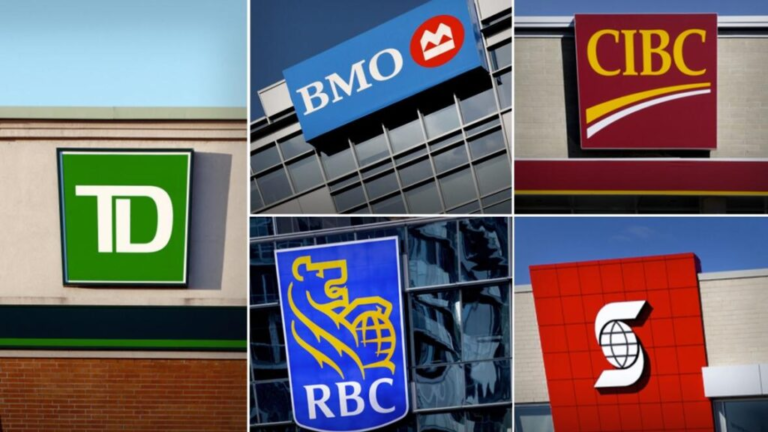
Canada’s banking sector is highly concentrated. The Big Five control 93% of all banking assets in the country and all offer dedicated newcomer programmes. Here is how they compare on the features that matter most to new arrivals.
Royal Bank of Canada (RBC)
RBC operates Canada’s largest combined branch and ATM network and offers banking services in over 200 languages. Its newcomer chequing account received the “Best Newcomer Chequing Account” recognition from Ratehub in 2026.
Key features for newcomers include no monthly fee for the first year, a credit card with up to a $15,000 limit requiring no Canadian credit history, $0 transfer fees on international money transfers, and up to 12% cashback for the first three months on eligible credit card purchases. RBC advisors are available by phone, in branch, or via video call, and many are former newcomers themselves.
Eligibility for the full newcomer package applies to permanent residents and international students within 12 months of arrival, and temporary resident workers within 48 months of arrival.
Toronto-Dominion Bank (TD)
TD’s New to Canada Banking programme is available to permanent and temporary residents within their first two years in Canada and is known for one of the most extensive branch networks in the country, with many locations open on weekends, which is practically useful for newcomers managing a heavy administrative schedule.
The core offering includes a TD Unlimited Chequing Account with no monthly fees for the first year, unlimited transactions and Interac e-Transfers, and access to a credit card with up to a $15,000 limit requiring no Canadian credit history. TD also runs a promotional offer through October 2026 providing $500 cash for new chequing accounts where eligible qualifying activities are completed.
Note that TD’s fee waiver runs for 12 months at the Unlimited Chequing level, which is competitive with most peers.
Scotiabank
Scotiabank’s StartRight Programme is one of the longest-running newcomer banking programmes in Canada and is open to newcomers within their first five years of arrival. It offers no monthly fees for 12 months on the Preferred Package (normally $16.95 per month), access to the Scene+ rewards programme, unlimited debit transactions and Interac e-Transfers, and discounts on international money transfers through Scotiabank’s global banking network.
Scotiabank stands out particularly for mortgage accessibility. The bank considers international credit history and income when evaluating mortgage applications, which is a meaningful advantage for newcomers planning to purchase property in Canada within a few years of arrival.
Bank of Montreal (BMO)
BMO offers a newcomer banking package including a no-fee chequing account and a credit card with no Canadian credit history required. BMO also supports pre-arrival account opening for eligible newcomers and has a strong presence in both Canada and the United States, which benefits those who cross the border regularly for work or family.
Canadian Imperial Bank of Commerce (CIBC)
CIBC’s Smart Account for Newcomers is available to those who received landed immigrant or permanent resident status within the past five years, or temporary resident workers with a Canadian work permit issued for a minimum 12-month term. Monthly account fees are rebated for the first two years, which is one of the longer fee-waiver windows among the Big Five.
CIBC’s pre-arrival Smart Arrival programme is among the most developed in the industry, allowing the entire initial application to be completed remotely before you land in Canada.
National Bank of Canada
National Bank is not one of the Big Five but has earned consistent recognition for its newcomer offering. It was named best bank for newcomers to Canada by MoneySense in 2025 for the third consecutive year. Its newcomer account carries no fixed monthly fees for up to three years and includes up to $600 in cashback when eligible products and services are added and maintained. National Bank is particularly strong in Quebec and Eastern Canada.
Newcomer Banking Comparison at a Glance
| Bank | Fee-Free Period | Credit Card (No History) | Pre-Arrival Banking | Notable Benefit |
|---|---|---|---|---|
| RBC | 12 months | Yes, up to $15,000 | Yes | Largest branch/ATM network; 200+ languages |
| TD | 12 months | Yes, up to $15,000 | Limited | Weekend branch hours; US cross-border strength |
| Scotiabank | 12 months | Yes | No | Mortgage flexibility for newcomers; StartRight up to 5 years |
| CIBC | 24 months | Yes | Yes (Smart Arrival) | Longest fee-free window; strong pre-arrival process |
| BMO | 12 months | Yes | Yes | US cross-border banking strength |
| National Bank | Up to 36 months | Yes | Yes | Longest potential fee-free window; strong in Quebec |
How to Open Your Account: Step by Step
Step 1: Choose your bank and account type. Compare the newcomer programmes above against your specific needs: location of branches, fee-free period, credit card access, international transfer fees, and any introductory cashback offers.
Step 2: Gather your documents. At minimum: your passport and your immigration document (PR card, COPR, work permit, or study permit). Bring a proof of Canadian address if you have one. If you do not yet have a permanent address, call the bank in advance to confirm what alternatives they will accept.
Step 3: Apply online before you arrive (if eligible). If your chosen bank offers a pre-arrival programme and you are still outside Canada, apply online first. This shortens the in-branch process upon arrival and, in some cases, allows you to transfer funds into a temporary account immediately.
Step 4: Visit a branch upon arrival (if required). Even banks with online pre-arrival applications typically require an in-branch visit to complete identity verification with original documents. Book an appointment in advance where possible to avoid a long wait.
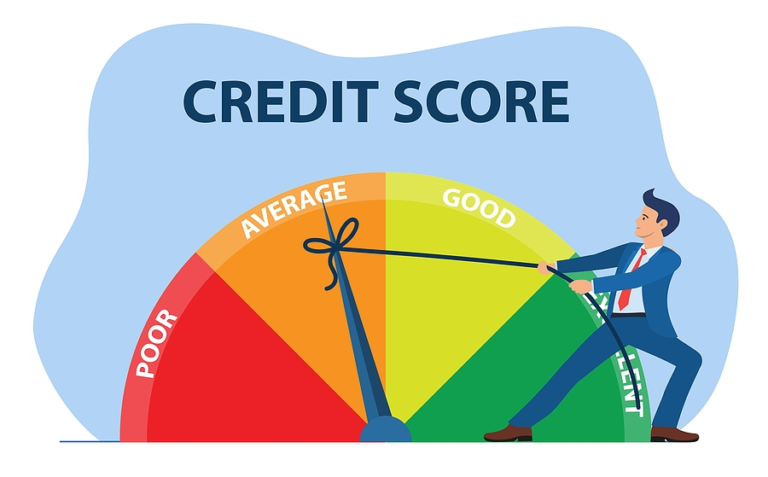
Step 5: Activate your account and apply for a credit card. Start using your chequing account for your salary deposit and bill payments immediately. Apply for a newcomer credit card at the same time, as most banks require no Canadian credit history. Using and paying off a credit card monthly is the fastest way to build a Canadian credit score.
Step 6: Apply for your SIN and open savings products. Once you have your Social Insurance Number, return to your bank to open a savings account or TFSA. Start contributing to your TFSA early; the annual $7,000 contribution room accumulates each calendar year you are a Canadian resident.
If a Bank Refuses to Open Your Account
A bank refusal is rare if your documents are in order, but it happens. If it does, the bank is legally required to provide you with a written explanation, along with information about its internal complaints process and the contact details for the OBSI and the FCAC.
You can file a formal complaint with your bank and escalate to the OBSI if the internal process does not resolve your situation. The FCAC also maintains an Account Comparison Tool at its website that can help you find institutions best suited to your situation.
Practical Tips to Avoid Common Mistakes
Do not wait until you arrive to research your options. Many newcomers spend their first week scrambling to open a bank account under time pressure. Research the programmes before you land and, if possible, begin the pre-arrival application process.
Keep your old account open during the transition. If you are transferring an existing account to a new institution, keep the old account running until all pre-authorized debits have been migrated, statements from both institutions confirm no duplicate payments, and the new account is running smoothly.
Shred old debit cards and cheques from any account you close. Do not simply throw them away.
Start building your Canadian credit score immediately. Apply for a newcomer credit card at the same time you open your chequing account. Pay the balance in full every month. A strong credit score in Canada takes 12 to 18 months to establish from scratch, and it affects your ability to rent, borrow, and get competitive rates on financial products.
Ask about fee structures before signing anything. Monthly fees, international transfer fees, ATM fees at third-party machines, and fees for falling below a minimum balance all vary significantly between institutions and account types. Fee-free introductory periods expire; know the standard rates before they kick in.
Set up electronic alerts. Canadian banks are legally required to send you an electronic alert without delay when your chequing or savings account balance falls below a level you specify. Set this up immediately to avoid surprise overdraft fees.
Frequently Asked Questions
Can I open a Canadian bank account as a tourist or visitor? Options are more limited, but it is possible. Some banks require proof of a Canadian address, which visitors may not have. Others restrict features for visitor accounts. Call your chosen bank before visiting a branch to confirm their policy. Those on a visitor visa awaiting a permit approval may have more success at banks with international banking programmes.
What is the minimum age to open a bank account in Canada? The standard minimum age is 18. Minors can open an account with parental or guardian consent, and several banks offer student or youth accounts specifically designed for applicants under 18.
Do I need to deposit money to open an account? No minimum opening deposit is required at many institutions, including CIBC. Some banks may ask for a small opening deposit of $25 to $100. Maintaining a minimum daily balance (typically $3,000 to $4,000) on certain chequing accounts can waive monthly fees once the newcomer fee-free period ends.
Can my spouse and I open a joint account? Yes. Both account holders need to provide valid identification and proof of immigration status, and both must be present for the in-branch appointment or complete the online application process together.
What happens to my account if my immigration status changes? Your bank account remains open regardless of changes to your immigration status. However, update your bank with new documentation, such as a renewed work permit, new study permit, or PR card, to ensure continued access to all account features and services.
Will the bank accept documents in a language other than English or French? Some banks, particularly those in multilingual communities, accept documents in other languages. Others require certified English or French translations, at the applicant’s cost. Call your chosen branch in advance to confirm their policy before your appointment.
Can I open a bank account in Canada if I have been bankrupt? Yes. Under federal law, a previous bankruptcy does not disqualify you from opening a basic personal bank account at a federally regulated institution.
Is my money protected if the bank fails? Deposits held at Canadian member institutions are insured by the Canada Deposit Insurance Corporation (CDIC) up to $100,000 per depositor per insured category. Provincially regulated credit unions are covered by separate provincial deposit insurance schemes.
Final Notes:
- By law, Canadian banks cannot refuse to open a basic bank account for someone who can confirm their identity. Previous bankruptcy, no job, and no existing balance are not valid grounds for refusal.
- You need two original pieces of identification, typically a foreign passport combined with your immigration document.
- A SIN is not required for a basic chequing account but is needed for any interest-bearing savings product, including TFSAs.
- Several banks, including CIBC, RBC, and BMO, allow you to begin the account-opening process before you arrive in Canada.
- The Big Five all offer newcomer programmes with fee-free periods ranging from 12 months (TD, RBC, Scotiabank) to 24 months (CIBC) to up to 36 months (National Bank).
- Apply for a newcomer credit card at the same time you open your chequing account. Building a Canadian credit history from day one saves you significant frustration over the following 12 to 18 months.
- The TFSA is one of the most powerful savings tools available to Canadian residents and should not be overlooked after you have your SIN.
- If you do not have a permanent address yet, call your chosen bank before your appointment. Most have accommodations for new arrivals in this situation.
Opening a bank account in Canada as a newcomer is more straightforward than most people expect, particularly once you understand what you are legally entitled to, which documents are actually required, and how the major banks’ newcomer programmes differ from one another.
The practical priority is simple: start as early as possible, ideally before you arrive, bring your passport and immigration documents to your first branch visit, apply for a credit card on the same day, and get your SIN application moving as soon as you land so you can open savings products without delay.
Canada’s banking system was built with newcomers in mind. The banks compete actively for your business from day one. Use that competition to your advantage.

[…] Opening a Canadian bank account as early as possible before or immediately after arriving simplifies the practical side of managing student loan disbursements and living expenses. Several major Canadian banks offer dedicated newcomer programmes with fee-free periods and credit-building tools specifically designed for new arrivals. A full breakdown of how to open a bank account in Canada as a foreigner is covered in detail here. […]
[…] a full walkthrough of that process, InsightWire’s complete guide to opening a bank account in Canada as a foreigner covers the documentation and timing in more […]