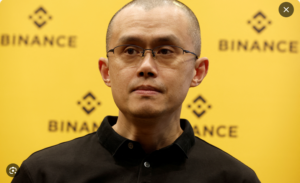
Changpeng Zhao built the world’s largest cryptocurrency exchange, pleaded guilty to federal charges, served four months in a U.S. federal prison, received a presidential pardon, and is now worth an estimated $110 billion. He is, by almost any measure, one of the most consequential figures in the history of digital finance. So what does a man like that think about after all of that?
In a candid episode of the Power Players with Brian Sozzi podcast, Zhao, known universally in crypto circles as CZ, reflected on his legal ordeal, his time in federal custody, the volatility that defines cryptocurrency markets, and what he intends to build next. What emerged was a portrait of someone who has genuinely recalibrated, not just for public consumption, but in terms of where he sees his energy going for the rest of his career.
Who Is Changpeng Zhao?
For readers who know crypto but not the man behind Binance, or who know the headlines but not the full arc, the background matters.
Zhao is a Canadian-born entrepreneur who co-founded Binance in 2017. Within a few years, the platform became the largest cryptocurrency exchange in the world by trading volume. Forbes currently estimates his net worth at approximately $110 billion, placing him among the 20 wealthiest people on earth and making him the richest Canadian alive.
That wealth was built fast, and the regulatory scrutiny that accompanied it was substantial.
The Legal Case: What Zhao Was Charged With and Why
The U.S. Department of Justice, following a years-long investigation, charged Zhao with operating a financial platform without adequate anti-money laundering safeguards. The allegation was not that Zhao personally laundered money, but that Binance, under his leadership, failed to implement the compliance controls required of financial institutions operating in the United States, effectively allowing illicit funds to flow through the platform.
In November 2023, Zhao pleaded guilty. He stepped down as Binance’s CEO as part of the resolution, and he was sentenced to four months in federal prison.
He was released in September 2024.
Then, on October 23, 2025, President Trump signed a full pardon for Zhao. The White House framed the original prosecution as part of a Biden administration “war on cryptocurrency,” positioning the pardon within the broader pro-crypto policy stance the Trump administration has adopted. Zhao said in the podcast that he has not yet had the chance to thank Trump in person but that he intends to.
Life Inside Federal Prison: The Psychological Weight Was the Hardest Part
Zhao said the physical conditions of incarceration were not what weighed on him most. What he struggled with more was the uncertainty that preceded it.
“I was really worried that they would recognize me and they would treat me differently,” he said. “Many of the major news outlets, like the Wall Street Journal and Bloomberg, they reported like I was going to be the richest person ever to go to U.S. prison. And that doesn’t help me.”
His legal and security consultants reportedly warned him before he reported to custody that his profile made him a potential target for extortion or worse. “That psychological uncertainty was actually much, much heavier to deal with than the physical aspects,” Zhao said.
Once inside, his fears did not materialize. “I was treated just like anybody else, which is great,” he said.
Four months is a relatively short custodial sentence by the standards of white-collar federal cases. But Zhao said the transition back to ordinary life was not immediate.
“Interestingly, even with only four months in prison, it took me a few weeks or maybe a couple months once I got out to recalibrate,” he said. “And then I looked forward to say, what can I do in my life.”
That recalibration period is worth noting, not as a dramatic detail but as context for how Zhao’s priorities appear to have shifted. The man who built Binance at a relentless pace is now, by his own account, thinking in longer arcs.
On Crypto Winters: Why Zhao Is Not Worried
Asked about the volatility that periodically rattles the crypto market, Zhao was characteristically measured.
“The cycles, the winters will always come and go. But the industry is growing,” he said. “Sixty thousand dollars for bitcoin, we think, is really low. Everyone’s panicking, but last winter, four years ago, it was $16,000.”
His point is structural rather than speculative. Zhao is not predicting a specific price target. He is arguing that each cycle’s floor tends to be higher than the last, and that the underlying driver of long-term value is adoption, not price action.
“I think we just need more applications, more use cases,” he said. “I think more and more use cases are coming. People are developing it.”
For retail investors prone to anxiety during drawdowns, Zhao’s framing offers a useful perspective: the historical pattern of crypto markets is one of dramatic volatility overlaid on a rising baseline, provided the underlying technology continues to find genuine applications. Whether that pattern continues is a matter of debate, but it has held across several full cycles so far.
What He Plans to Do With the Next 25 Years
Perhaps the most substantive part of the conversation concerned Zhao’s post-Binance plans. He outlined three areas of focus.
Investing in founders with world-changing technology. Zhao said he intends to back early-stage founders working on technologies he believes can have outsized impact. He was candid about the math: “So many of our investments will fail, but hopefully we’ll invest in a few of those that will be extremely successful.” That is a standard venture capital framing, but coming from someone with his capital base and network, the scale of impact from even a handful of successful bets could be significant.
Free education through Gig Academy. This may be the most underreported aspect of Zhao’s current focus. Gig Academy is a free online education platform he has been building out. At the start of 2025, the platform had 100,000 registered students. By the time of the podcast recording, that number had reached 500,000. Zhao described education as “very fundamental,” and the growth rate suggests the platform is gaining real traction. Given the global access problem in quality education, particularly in emerging markets, a well-resourced free learning platform with this kind of growth trajectory is worth watching.
Government advisory work on crypto regulation. Zhao said he is advising several governments on cryptocurrency regulatory policy. He did not name specific countries in the excerpt, but this role is notable given his own regulatory history. His direct experience navigating a major compliance failure and federal prosecution arguably gives him a perspective on crypto regulation that few people in the world possess. Whether governments find that perspective useful or problematic will vary.
Why the Pardon Matters Beyond Zhao
The Trump pardon of Zhao carries implications beyond one individual’s legal record.
It reinforces the signal that the current U.S. administration views the prior enforcement posture toward crypto as politically motivated rather than legitimate financial regulation. That framing, if it shapes policy going forward, could have significant consequences for how exchanges, stablecoin issuers, and DeFi platforms are regulated in the United States over the next several years.
For investors and businesses in the crypto space, the direction of U.S. crypto policy is arguably the single most important variable in the near-term regulatory environment. Zhao’s pardon is one data point in a broader pattern pointing toward a more permissive stance.
What Zhao’s Story Tells Us About Risk in the Crypto Industry
The arc of Zhao’s story contains a lesson that is easy to overlook in the focus on his net worth and his pardon.
Binance’s compliance failures were not incidental. They were structural, built into a company that scaled at extraordinary speed without investing proportionally in the regulatory and compliance infrastructure that U.S. law requires of financial platforms. The DOJ case, whatever one thinks of its political framing, was grounded in real deficiencies.
For anyone building or investing in crypto businesses, that is the durable lesson. The technology may be transformative. The market opportunity may be genuine. But operating without adequate compliance controls, particularly in jurisdictions with active financial regulators, is a risk that does not resolve itself over time. It compounds.
Zhao is now worth $110 billion and holds a presidential pardon. Most people who make the same compliance mistakes will not have either outcome.
Points Summary
- Changpeng Zhao pleaded guilty in November 2023 to running Binance without adequate anti-money laundering controls, served four months in federal prison, and was released in September 2024.
- President Trump pardoned Zhao on October 23, 2025, framing the original prosecution as politically motivated.
- Zhao said the psychological anticipation of prison, particularly fears of being targeted due to his wealth, was harder to manage than the physical experience itself.
- On crypto markets, Zhao argues that volatility is cyclical, but the industry’s floor rises with each cycle, driven by expanding real-world use cases.
- Post-prison, Zhao is focused on three areas: investing in high-impact founders, scaling Gig Academy (now at 500,000 registered students), and advising governments on crypto regulation.
- Binance’s compliance failures carry a broader industry lesson: rapid scaling without proportionate investment in regulatory infrastructure creates risks that do not diminish over time.