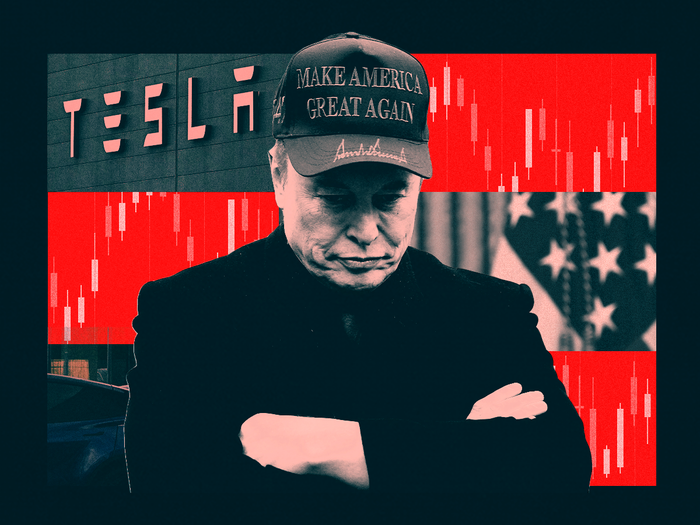
When SpaceX opened on the Nasdaq at $150 per share on June 12, 2026, it did not just set a new record for the largest initial public offering in history. It created something the global economy has never seen before: a private individual worth more than one trillion dollars. Elon Musk, already the world’s wealthiest person heading into the debut, crossed that threshold the moment trading began. His net worth is now estimated at approximately $1.1 trillion, a number so large that most conventional frameworks for understanding wealth simply break down.
To understand what this moment means, you have to look at where it sits in financial history, what it reveals about how extreme wealth actually works, and what risks and questions it raises for investors and the broader economy alike.
The Math Behind the Milestone
Before the IPO priced, Forbes estimated Musk’s net worth at approximately $982.6 billion, a figure that already placed him in a category well beyond any other living person. His approximately 42 percent equity stake in SpaceX, combined with holdings in Tesla worth roughly $355 billion, had been building toward this threshold for months.
When SpaceX priced at $135 per share, valuing the company at $1.77 trillion, the value of Musk’s SpaceX stake alone was put at approximately $866.5 billion according to the company’s updated IPO prospectus. Once trading opened and the stock climbed, his combined wealth from SpaceX and Tesla pushed past the $1 trillion mark. Bloomberg confirmed the milestone, noting that his net worth now exceeds the combined fortunes of Larry Page, Sergey Brin, and Jeff Bezos, the next three names on the Bloomberg Billionaires Index. As a trillionaire, Musk is worth roughly seven Warren Buffetts.
However, a critical fact often buried beneath the headline: less than 0.1 percent of Musk’s net worth sits in cash. He disclosed this himself. Nearly everything is paper wealth, equity stakes in companies whose valuations move with market sentiment. His SpaceX shares are subject to a 12-month post-IPO lockup, meaning he cannot sell a single share until mid-2027. The trillion-dollar figure is real in the sense that it exists on paper. It is not liquid in any practical sense.
How SpaceX’s IPO Reshaped the Global Wealth Picture
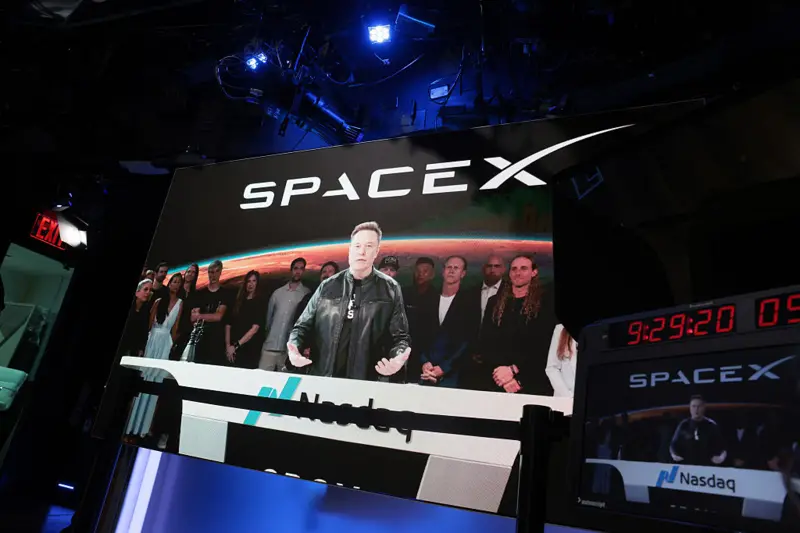
For our full breakdown of the IPO itself, including how the first day of trading unfolded, the mechanics of the greenshoe option, and what forward catalysts still lie ahead for SPCX shareholders, read our detailed analysis: SpaceX’s Historic IPO: What Actually Happened on Day One and What Comes Next for SPCX.
The scale of Musk’s new position in the global wealth hierarchy is genuinely without precedent. His net worth now represents roughly 3 percent of United States gross domestic product. To put the trillion-dollar figure in terms that translate more intuitively: spending $1 million every single day, it would take close to three thousand years to exhaust it. That kind of comparison is not hyperbole. It reflects a structural reality about the gap between trillion-dollar wealth and the scale of wealth that existed even a generation ago.
A New Kind of Robber Baron, or Something Different Entirely?
Economic historians studying extreme concentrations of wealth inevitably reach back to the Gilded Age. Figures like John D. Rockefeller in oil, Andrew Carnegie in steel, and John Jacob Astor in real estate controlled enormous empires at the peak of American industrialisation. At their wealthiest, their fortunes represented somewhere between 0.5 and 1.5 percent of the total US economy.
Musk’s fortune, at 3 percent of US GDP, surpasses that leverage by a significant margin. And the parallels extend beyond numbers. The industrialists of the late 19th and early 20th centuries were deeply controversial public figures, accused of anticompetitive practices, regulatory capture, and using their economic power to shape political outcomes in their favour. The label “Robber Baron” stuck precisely because their business tactics were widely perceived as ruthless and their political influence as corrupting.
Musk’s trajectory carries recognisable echoes. His ownership of X, formerly Twitter, gives him a communications platform with roughly 600 million registered users, which he has used actively to promote specific political positions and candidates. His roles in restructuring government operations have generated significant public controversy. And his companies hold substantial government contracts, from NASA missions to Department of Defence satellite communications, creating a relationship between private wealth and public resources that invites scrutiny.
The parallel is not perfect. The original Robber Barons operated in an era before income taxes, antitrust law, and federal regulatory bodies. Many of the structural constraints that now exist in the economy were built specifically in response to the political backlash their wealth concentration produced. Musk operates within a far more developed regulatory framework, though critics argue that framework has not kept pace with the scale of wealth now possible through equity markets.
The Philanthropy Gap
One of the clearest divergences between today’s extreme wealth and the Gilded Age model concerns charitable giving. Carnegie’s “Gospel of Wealth,” his famous argument that the rich are morally obligated to spend their fortunes improving society during their lifetimes, was not just rhetoric. He gave away roughly 90 percent of his fortune, funding thousands of public libraries, universities, and cultural institutions that still exist today.
Musk did sign the Giving Pledge in 2012, the initiative started by Bill Gates and Warren Buffett to encourage billionaires to donate the majority of their wealth. In practice, however, the picture is more complicated. The Musk Foundation, his primary philanthropic vehicle, held assets with a fair market value of $14.7 billion as of the fiscal year ending December 2024. In that year it made $474 million in charitable disbursements, but three grants totalling $370 million flowed to The Foundation, a charity controlled by Musk and run by his associates. Analysts who study philanthropic giving note that the bulk of his charitable contributions remain closely tied to his own business interests or flow through intermediary structures that limit external accountability.
This is not a legal problem. Donor-advised funds and founder-controlled foundations are entirely permissible under US tax law. But the contrast with Carnegie’s model of giving, which was explicitly designed to benefit the public rather than the donor’s extended ecosystem, is pronounced.
The Structural Risks Hidden Behind the Headline Number
A trillion dollars in net worth commands attention. But the structural fragility of that figure deserves equal attention.
Musk’s wealth is almost entirely concentrated in two companies: SpaceX and Tesla. A 20 percent decline in SpaceX’s share price alone would erase more than $150 billion from his net worth overnight, an amount roughly equivalent to wiping out the entire fortune of Jeff Bezos. His SpaceX shares cannot be sold until mid-2027 due to the post-IPO lockup, leaving him fully exposed to market movements with no ability to reduce that exposure in the near term.
SpaceX itself presents a valuation puzzle that the market has not yet fully resolved. The company generated $18.7 billion in revenue in 2025 and recorded a net loss of $4.94 billion. At a $2 trillion-plus market capitalisation, investors are effectively pricing in the realisation of Musk’s most ambitious projections, including his claim that SpaceX could generate $1 trillion in annual revenue by 2030. Starlink, the only profitable division, is the primary financial engine. The launch business, Starship development, and the recently announced $60 billion acquisition of Anysphere, the parent company of AI coding tool Cursor, are all loss-generating or speculative at this stage.
The Anysphere deal is itself worth examining carefully. It was structured as an all-stock transaction, meaning SpaceX did not use cash. But it implies approximately 3.4 percent dilution of existing shareholders, a meaningful cost for investors who bought into the IPO expecting a more focused aerospace and connectivity story.
What Governance Means for Ordinary SPCX Investors
Beyond the wealth story, there is a governance dimension that matters directly to anyone holding SPCX shares.
SpaceX’s S-1 registration statement, filed with the SEC on May 20, 2026, disclosed a dual-class share structure in which Musk’s Class B shares carry 10 votes each compared to the single vote attached to the Class A shares sold in the IPO. This gives Musk approximately 82.4 percent of all voting power while holding 42 percent of the economic equity. In practice, public shareholders have economic exposure to the company’s performance but virtually no meaningful say in how it is run.
That structure also came with unusual legal provisions. The S-1 disclosed that investors who purchase SPCX shares waive their rights to jury trials and class-action lawsuits, a highly uncommon protection for a company to demand from its public shareholders. These terms did not appear to dampen demand. The book was still oversubscribed nearly four times over. But investors buying today should understand exactly what governance rights they are and are not acquiring.
Will History Repeat Itself?
The concentration of wealth that defined the Gilded Age ultimately produced a political and regulatory response that reshaped the American economy. The federal income tax, antitrust legislation, and the creation of the Federal Trade Commission all emerged directly from the social friction generated by that era’s extreme inequality.
Most economists suggest that the current political environment is far more resistant to that kind of structural regulatory reform. The mechanisms for bottom-up legislative change are slower, more fragmented, and more susceptible to institutional resistance than they were a century ago.
But the scale of what has now occurred is genuinely new. No private individual in modern financial history has held a fortune representing 3 percent of the largest economy on earth. Whether that scale eventually generates its own political response, whether through renewed antitrust scrutiny, changes to how equity-based wealth is taxed, or broader regulatory attention to dual-class share structures, remains an open question. What is not open to debate is that the question now exists in a way it did not before June 12, 2026.
Going Forward:
A trillion dollars is not simply a large number. It is a threshold that changes the way wealth relates to the economies and institutions around it. Elon Musk’s crossing of that threshold on June 12, 2026, is a genuine historical event, one that future economists will study alongside the fortunes of Carnegie and Rockefeller when trying to understand how markets, technology, and regulation interact over long periods of time.
For investors, the immediate question is simpler: what does a company worth more than $2 trillion, losing nearly $5 billion a year, need to execute on for that valuation to make sense? For everyone else, the question is larger and harder to answer: when a single individual’s paper wealth equals 3 percent of the biggest economy on the planet, what does that mean for how decisions get made, how institutions function, and who ultimately bears the risk when concentrated bets go wrong?
Neither question has a comfortable answer yet.