
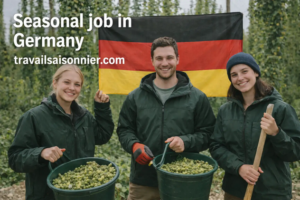
Germany’s farms are short-staffed and actively recruiting international workers. Here is a practical breakdown of what the jobs pay, who qualifies, how the visa process works, and exactly where to apply without falling for scams.
Why Germany’s Agricultural Sector Is Hiring Internationally
Germany is one of Europe’s largest food producers, and its farms run on a predictable annual cycle that creates hundreds of thousands of seasonal job openings between March and November every year. The problem is a shrinking domestic workforce. Germany’s ageing population and low rural employment rates mean the local labour supply has been unable to meet harvest demand for years.
In 2026, that gap is acute enough that the German government actively supports international recruitment through regulated visa frameworks, not as a last resort, but as official policy.
For foreign workers, this creates a genuinely practical opportunity. Earnings start at €2,200 per month gross, visa sponsorship is handled largely by the employer, accommodation is typically subsidized, and Germany’s labour law enforcement means your contract terms are taken seriously.
If seasonal agricultural work in Canada is also on your radar, the 2026 guide to seasonal jobs in Canada for foreign workers covers a comparable set of opportunities in North America.
What You Can Actually Earn
Seasonal agricultural wages in Germany are tied to the national minimum wage floor, which currently sits at €13.50 per hour, with most farms paying between €13.50 and €16.00 per hour depending on the role and region. Overtime hours, which are common during peak harvest, are typically paid at 125% to 150% of base rate.
Below are realistic monthly gross figures for the most common roles, assuming standard hours plus typical overtime.
Standard Seasonal Roles
| Role | Monthly Earnings (Gross) |
|---|---|
| Fruit Picker (Strawberries, Apples, Blueberries) | €2,200 to €2,600 |
| Vegetable Harvester (Asparagus, Carrots, Cabbage) | €2,300 to €2,700 |
| Poultry Farm Worker (Egg Collection and Packaging) | €2,300 to €2,800 |
| Greenhouse Worker (Tomatoes and Cucumbers) | €2,400 to €2,900 |
| Vineyard Worker (Grape Harvesting) | €2,400 to €3,100 |
| Dairy Farm Assistant (Milking and Feeding) | €2,500 to €3,000 |
Peak harvest seasons in regions like Bavaria and Lower Saxony regularly push monthly earnings past €3,000 for workers putting in consistent overtime.
Specialised and Higher-Paying Roles
Workers with prior farming experience, technical training, or machinery licenses can target a higher tier of roles with better base pay.
| Role | Monthly Earnings (Gross) | Key Requirement |
|---|---|---|
| Greenhouse Technician | €2,800 to €3,200 | Irrigation and climate control experience |
| Dairy Farm Specialist | €2,700 to €3,300 | Automated milking system operation |
| Vineyard Harvest Supervisor | €3,000 to €3,500 | Team coordination, basic German preferred |
| Agricultural Machinery Operator | €3,200 to €3,800 | Tractor and heavy harvester license |
What You Can Realistically Save
Cost of living is the variable that determines how much actually reaches your savings account. Seasonal agricultural work in Germany is unusually favourable on this front.
Most farms offer on-site accommodation at a heavily subsidised rate, typically deducted directly from your paycheck at €150 to €300 per month. Rural food costs are low. Workers with structured spending report saving between €800 and €1,500 every month, sometimes more during peak earning periods.
A six-month contract at the lower end of that savings range puts €4,800 in your account. At the upper end, it is closer to €9,000. For workers coming from lower-income economies, a single seasonal contract can represent a meaningful financial step forward.
Who Qualifies: Eligibility Requirements
The baseline requirements for most seasonal agricultural roles in Germany are straightforward. No formal degree is required for standard positions.
Core requirements:
- Minimum age of 18 years. Most employers prefer applicants under 55 due to the physical demands of the work.
- A valid international passport with sufficient remaining validity to cover your contract period.
- A clean criminal record (you will need a police clearance certificate for the visa application).
- Basic physical fitness. These roles involve long hours of standing, bending, lifting, and working in outdoor or greenhouse conditions.
- Basic communication in English or German. Fluency is not required for most standard roles, but the ability to understand safety instructions and basic team communication is necessary.
For specialised roles:
- Documented machinery licenses or operational certifications for equipment-based positions.
- Prior farming or agricultural experience verified by reference or employment record.
- Basic German is expected for supervisory roles like vineyard harvest coordinator.
The Visa Process: How It Works Step by Step
Germany offers two distinct legal pathways for international agricultural workers, each suited to a different type of role and contract length.
Option 1: Short-Term Seasonal Work Visa
- Duration: 90 days up to 6 months
- Best for: Intensive harvest work such as fruit picking, vegetable harvesting, and grape harvesting
- Processing time: Typically 4 to 8 weeks once all documents are submitted
This visa is designed specifically for seasonal harvest work. It is the most common pathway for first-time applicants and is processed through the German Embassy in your home country.
Option 2: Temporary Work Visa for Agriculture
- Duration: Up to 12 months
- Best for: Year-round or extended roles in dairy farms, greenhouses, and specialised agricultural operations
- Growth path: Workers who perform well on this visa are frequently invited back for subsequent seasons, and some transition into longer-term European employment arrangements over time.
What Your Visa File Must Contain
German immigration authorities expect organised, complete documentation. Incomplete files are a common reason for delays. Prepare the following before submitting:
- A signed, official employment contract from a registered German farm
- Proof of on-site accommodation provided by the employer
- Proof of health insurance coverage for the duration of your stay (many employers help arrange this as part of the hiring package)
- A one- to two-page CV that highlights physical work experience, any relevant farm or machinery skills, reliability, and teamwork
- A valid passport with at least six months of remaining validity beyond your contract end date
- A police clearance certificate from your home country
- Passport-sized photographs meeting German Embassy photo specifications
How to Avoid Scams: A Practical Warning
Agricultural job scams targeting foreign workers are common, and Germany’s high wages make it a particularly attractive target for fraudsters. Understanding how legitimate recruitment works is your best protection.
What legitimate recruitment looks like:
- The employer provides a signed, official employment contract before you pay anything.
- The only fees you pay upfront are official German Embassy visa processing fees, paid directly to the embassy, never to an agent or recruiter.
- Verified employers do not ask you to send money via mobile transfer, gift cards, or cryptocurrency to secure a position.
- Official job offers come with a traceable company name, a verifiable German business registration number, and contact details you can independently confirm.
Red flags to walk away from immediately:
- Any recruiter or agent charging an upfront fee for “guaranteed visa jobs”
- Job offers that arrive via WhatsApp or Facebook from accounts with no verifiable history
- Employers who ask you to pay for your own health insurance or accommodation before signing a contract
- Salary figures that are significantly above the ranges in this guide without a credible explanation
If you are unsure whether an opportunity is legitimate, verify the employer directly through the Federal Employment Agency of Germany’s official portal or contact the German Embassy in your country.
Where to Find Verified Job Openings
Focus your search on official, regulated channels rather than informal social media groups. The following sources list verified openings with real visa sponsorship.
Official government portals:
- Federal Employment Agency of Germany (Bundesagentur fur Arbeit): Germany’s official government labour portal. It maintains a live database of documented agricultural labour shortages and verified employer listings.
- EURES Portal (European Employment Services): The EU’s official job mobility network, which matches international applicants with verified employers across all member states, including Germany.
Major agricultural employers to approach directly:
- BayWa AG: One of Germany’s largest agricultural cooperatives, operating across multiple regions.
- Sudzucker AG: A major sugar beet and agricultural processing group with seasonal harvest operations.
- Nordzucker AG: Similar large-scale agricultural operations focused on northern Germany.
- Driscoll’s Germany partner farms: Large berry operations linked to the international Driscoll’s network, with established international hiring pipelines.
Check the careers pages of these organisations directly. Large cooperatives often post seasonal openings months in advance and have dedicated HR contacts for international applicants.
When to Apply: Timing Is Critical
The agricultural calendar in Germany is predictable, and so is the hiring cycle. Most farms begin processing international applications between October and February for the spring and summer harvest season.
Applying four to six months before the harvest begins gives employers enough lead time to issue your contract, process your visa paperwork, and ensure you are cleared to arrive when the high-earning season opens. Applications submitted after March are significantly less likely to result in visa-sponsored placements for that year.
Key dates to plan around:
| Season | Harvest Period | Application Window |
|---|---|---|
| Spring Harvest (Asparagus, Strawberries) | March to June | October to December |
| Summer Harvest (Blueberries, Tomatoes) | June to August | January to March |
| Autumn Harvest (Grapes, Apples, Cabbage) | August to November | February to April |
| Year-Round Roles (Dairy, Greenhouses) | Ongoing | Any time, with 3 to 4 months lead |
What to Expect When You Arrive
Understanding what day-to-day life looks like helps you prepare practically and avoid surprises.
Accommodation: On-farm housing is standard and typically shared with other seasonal workers. Expect basic but functional facilities: a bed, shared kitchen, bathroom, and sometimes Wi-Fi. The monthly deduction of €150 to €300 from your paycheck covers this.
Work schedule: Seasonal agricultural work follows the daylight and weather, not a fixed 9-to-5 schedule. Expect early starts, outdoor conditions, and physically demanding repetitive tasks. During peak harvest, 10 to 12-hour days are common. This is why overtime earnings can push monthly income significantly above the baseline figures.
Language: Most farms have international workforces, so English is commonly spoken among workers. Supervisors may communicate primarily in German, particularly on larger operations. Learning a basic set of German words and numbers before you arrive makes a noticeable practical difference.
Tax and social contributions: Germany automatically deducts income tax and social security contributions from your gross salary. The amount depends on your tax bracket and length of stay, but as a seasonal worker, you may be eligible to claim a tax refund at the end of your contract through a straightforward application process.
Information In Points
- Germany’s agricultural labour shortage is acute in 2026, making international recruitment through official visa channels a practical and well-supported route.
- Standard seasonal roles pay €2,200 to €3,000 gross per month. Specialised or equipment-based roles pay €2,800 to €3,800.
- Subsidized on-farm housing at €150 to €300 per month keeps living costs low. Realistic monthly savings range from €800 to €1,500.
- Two visa options exist: a short-term seasonal visa (up to 6 months) and a temporary agricultural work visa (up to 12 months).
- Apply between October and February for spring and summer placements. Applications submitted after March are significantly less competitive.
- Use only official channels: the Federal Employment Agency of Germany, the EURES Portal, and the careers pages of major agricultural cooperatives.
- Never pay upfront fees to agents or recruiters. Legitimate employers provide contracts at no cost to the applicant.
- Strong performance on a seasonal contract frequently leads to repeat invitations and, over time, longer-term European work opportunities.
Frequently Asked Questions
Do I need to speak German to get hired?
Not for most standard roles. Basic English communication is sufficient for the majority of fruit picking, vegetable harvesting, and greenhouse positions. German language ability becomes more important and sometimes required for supervisory roles or positions that involve direct interaction with farm management.
Does the farm pay for my flight to Germany?
In most cases, no. The flight is at your own cost. What farms typically cover or subsidise is accommodation on-site, and some larger operations help arrange health insurance as part of the contract. Always confirm exactly what is and is not covered before signing.
Can I extend my stay beyond the initial contract?
Yes, in many cases. Workers who perform well are frequently offered contract renewals or invitations for the following season. If you start on a short-term seasonal visa and the employer wants to retain you, they can support an application for a longer-term work authorisation. This is one of the more realistic pathways to extended European work experience.
Will I pay taxes in Germany on my seasonal earnings?
Yes. German income tax and social security contributions are deducted at source, meaning your employer withholds them from each paycheck automatically. The gross salary figures in this guide reflect pre-tax earnings. Net take-home pay will be lower depending on your tax class and the length of your stay. Seasonal workers who work fewer than six months in a calendar year may be eligible for a partial tax refund.
Is seasonal farm work physically demanding?
Yes, significantly. Most roles involve long hours of standing, bending, lifting, and working in outdoor or temperature-controlled environments. Employers know this and do not require prior farming experience for entry-level roles, but they do expect physical fitness and reliability. If you have any health conditions affecting your mobility or stamina, factor this in before applying.
Can I bring family members on a seasonal agricultural visa?
The short-term seasonal visa (90 days to 6 months) generally does not permit family reunification. The 12-month temporary work visa may be allowed under certain conditions, but this varies by individual circumstance and is subject to the discretion of the German Embassy processing your application. Raise this question directly with the embassy during your pre-application consultation.
What happens if my employer violates the contract?
Germany’s labor laws are binding and enforced. If your employer fails to pay agreed wages, demands unpaid overtime beyond your contract terms, or violates your accommodation agreement, you have the legal right to file a complaint with the Federal Employment Agency or seek assistance from a trade union. The Gewerkschaft Nahrung-Genuss-Gaststatten (NGG) is the relevant union for agricultural and food sector workers in Germany.
Start Your Application the Right Way
The path to a legitimate seasonal farming role in Germany is not complicated, but it does require preparation. Verify your eligibility, organise your documents early, apply through official channels between October and February, and target employers large enough to have established international hiring pipelines.
The financial outcome, €800 to €1,500 in savings every month while building EU work history, is achievable. The main variable is how seriously you treat the process before you submit a single application.



[…] you are also weighing options in Europe, Germany’s seasonal farm jobs program runs a comparable structure with earnings starting at €2,200 per month and employer-managed visa […]