Missing a loan payment does not make you financially irresponsible. Job losses happen without warning. Medical emergencies do not consult your repayment schedule. Business revenue can collapse in a quarter that looked promising three months earlier. These are not failures of character. They are the financial realities that millions of Nigerians navigate every year.
What does cause lasting damage is not the missed payment itself. It is the decision to do nothing about it. Interest accumulates daily on unpaid balances. Penalty fees layer on top. Credit records deteriorate. And the longer the gap between the missed payment and a concrete response, the steeper the climb back becomes.
This guide explains exactly what happens to your finances, your credit, and your relationships when loan repayments fall behind, and gives you a practical framework for getting back on track regardless of where you are starting from.
Why Unpaid Debt Does Not Stay the Same Size
The most common misconception about missed payments is that the debt simply sits there, unchanged, waiting to be addressed later. It does not. Unpaid balances grow continuously because interest accrues on the outstanding amount, which now includes previously unpaid interest. Many Nigerian lenders also apply penalty charges for each period that a payment is missed, adding a fixed cost on top of the compounding interest.
The practical result is that a debt of ₦200,000 that feels unmanageable today will be a measurably larger problem in 60 or 90 days. The window in which a repayment plan is most affordable is always the earliest one available. Every week of inaction closes that window a little further.
You Need To Understand The Following Things
- Unpaid debt grows continuously through interest accumulation and penalty charges. The earliest intervention always produces the smallest total cost.
- Nigerian credit bureaus record missed payments and defaults, and those records affect access to mortgages, business loans, government housing schemes, and future credit products.
- Lenders generally prefer to restructure repayments with engaged borrowers rather than pursue formal default recovery. Contacting your lender before missing a payment typically preserves more options than contacting them after.
- Never borrow to repay. Cycling debt from one facility to another increases total cost and delays the underlying recovery.
- A guarantor who co-signed your loan is directly affected by a default. Protecting that relationship is an additional reason to address repayment difficulties early.
- Credit repair takes consistent effort over six to eighteen months, but a damaged record is not permanent. Every on-time payment contributes to the rebuilding process.
- Review your credit bureau report periodically to confirm accuracy and track your progress.
5 Ways Missed Loan Payments Affect Your Life
1. Your Credit History Takes a Direct Hit
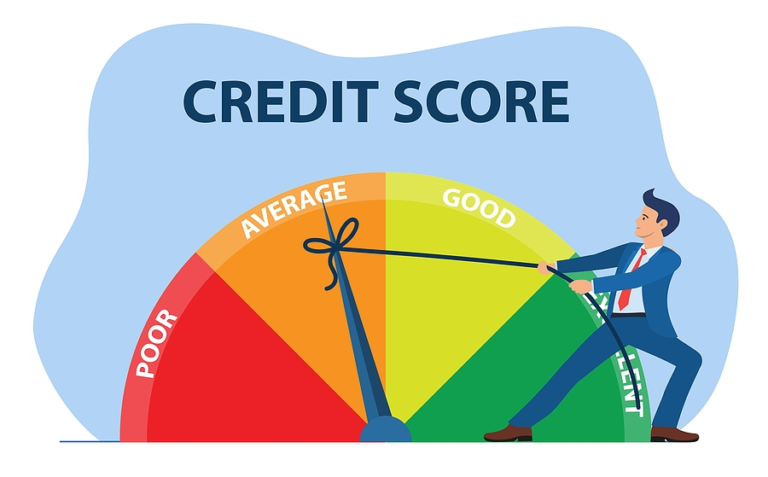
Every loan issued by a regulated financial institution in Nigeria is reported to the country’s credit bureaus, including CRC Credit Bureau, Credit Registry, and FirstCentral Credit Bureau. When you repay on time, those records become an asset that future lenders use to assess your reliability. When you miss payments, those same records document the default.
A negative credit entry does not disappear quickly. It remains on your bureau report for a significant period and affects how lenders, landlords, and even some employers evaluate you. The consequences are not limited to small personal loans. A damaged credit history can block access to mortgage products, prevent participation in government housing schemes like the National Housing Fund (NHF), and disqualify you from business financing at the precise moment you need capital most.
2. The Total Amount You Owe Keeps Growing
The number you agreed to repay is not the number you will owe if you delay. Interest does not pause because a payment was missed. It continues to build on the unpaid balance, which grows with each passing cycle. Late payment penalties compound this further.
A missed payment triggers a chain that moves in one direction unless actively interrupted:
Missed Payment → Unpaid Balance → Continuous Interest + Penalty Fees → Larger Total Debt → Harder to Repay
Addressing the problem early, even partially, limits how far along that chain the situation travels. Waiting for circumstances to improve on their own almost always produces a larger final bill than engaging with the lender directly would have.
3. It Takes a Real Psychological Toll
Financial distress rarely stays contained to spreadsheets. The anxiety of an unpaid debt follows you into your work, your relationships, and your sleep. Collection calls, automated reminder messages, and the persistent background awareness that a financial problem is unresolved are genuinely draining in ways that are difficult to quantify but easy to recognize.
This psychological weight often creates a secondary problem: avoidance. The discomfort of facing the numbers becomes a reason to avoid looking at them, which allows the debt to grow in silence. The data on debt recovery consistently shows that people who engage with their situation early, even imperfectly, fare better than those who wait for the perfect moment to act.
Taking a concrete step, even a small one, produces a measurable reduction in anxiety. Not because the debt disappears, but because the sense of helplessness does.
4. Your Future Financial Options Narrow
A compromised credit profile does not just affect your current borrowing capacity. It raises the cost of future borrowing, restricts the products available to you, and in some cases blocks access entirely. Premium financial products, lower interest rates, and higher credit limits are all extended to borrowers with strong repayment histories. Borrowers with defaults on record get the least favorable terms the market offers, if they get any access at all.
For entrepreneurs, this has a sharper edge. Poor repayment history can cut off access to business growth capital at exactly the moment when a business needs investment to survive a difficult period or seize a time-sensitive opportunity. The compounding of a credit problem and a business problem simultaneously is one of the most common patterns in small business failure in Nigeria.
5. It Can Damage Relationships That Matter More Than Any Loan
Many traditional lending structures in Nigeria require a guarantor, a family member, a colleague, or a close friend who agrees to take responsibility for the debt if the primary borrower defaults. When a default occurs, it stops being a private financial matter between you and the institution.
The guarantor receives collection calls. Their creditworthiness may be affected. The trust that they extended by signing their name to your application becomes a source of tension or outright conflict. Financial strain between people who agreed to stand behind each other is one of the more damaging and lasting consequences of unaddressed debt, precisely because the recovery of that trust is slower and less certain than the recovery of a credit score.
A Practical Recovery Framework
The steps below apply regardless of whether you have already missed a payment or can see one coming in the next few weeks. The earlier you move through this process, the more options remain available.
Step One: Do an Honest Financial Audit
Before you can make a plan, you need accurate numbers. Write down your total outstanding balance across every loan or credit obligation you carry, the interest rate and penalty structure for each, the minimum payment required to prevent further default on each, your actual monthly income after tax, and your fixed non-negotiable monthly expenses.
Do not estimate. Pull actual figures from your bank statements and loan documents. The gap between what you think you owe and what you actually owe is often significant, and the plan you build needs to be based on reality, not approximation.
Step Two: Cut Non-Essential Spending Temporarily
Once you have a clear picture of your cash flow, identify every expense that is not essential to maintaining your income or basic living costs. Subscriptions, dining out, discretionary shopping, and non-urgent travel are candidates for suspension. The goal is to free up the maximum possible cash for debt service without creating a spending cut so severe that it becomes unsustainable within a month.
Temporary austerity is not a long-term solution, but it creates breathing room during a critical window.
Step Three: Stop Taking on New Debt
This is the most important rule to enforce during a debt recovery period. Borrowing money to repay an existing loan feels like a solution because it stops the immediate pressure. It is not a solution. It displaces the problem into the future while adding a new layer of interest obligations. Each cycle of this pattern makes the underlying debt situation more expensive and more difficult to exit.
If you are considering a new loan to cover an existing one, stop and use those same resources to contact your current lender instead.
Step Four: Contact Your Lender Directly
Most borrowers assume that calling their lender about a repayment problem will accelerate negative consequences. The opposite is generally true. Nigerian financial institutions have structured processes for managing borrowers who engage proactively before defaulting, because a renegotiated repayment plan costs them less than a formal default and recovery process.
Options that lenders commonly extend to borrowers in difficulty include:
- Repayment restructuring: Extending the loan term to reduce monthly payment amounts
- Payment deferral: Postponing one or more payments to a later date without triggering a formal default
- Interest rate reduction: Temporarily reducing the rate applied to the outstanding balance
- Settlement negotiations: For loans already in default, some lenders will accept a negotiated lump sum below the full outstanding balance to close the account
None of these options is guaranteed, but none of them are available to borrowers who do not ask.
Recovery Roadmap Based on Where You Are Now
| Your Current Situation | Recommended Action | Expected Outcome |
|---|---|---|
| Payment difficulty is approaching but has not yet been missed | Contact your lender now to discuss restructuring before the deadline passes | Prevents a formal default from appearing on your credit report |
| One or two payments already missed | Request a restructuring meeting with your lender and begin a reduced repayment plan | Stops further penalty accumulation and begins repairing the record |
| Already in full default | Create a small, realistic repayment plan based on actual income and present it to your lender | Demonstrates good faith, may unlock a settlement option |
| Balance fully settled | Adopt consistent credit habits and review your bureau report every six months | Gradually rebuilds your credit score for future opportunities |
How to Rebuild Your Credit After a Missed Payment
Credit repair in Nigeria is slower than most people want it to be, but it is not complicated. The following steps consistently produce improvement over time.
Request your credit report. All three Nigerian credit bureaus, CRC Credit Bureau, Credit Registry, and FirstCentral Credit Bureau, allow individuals to request their own reports. Reviewing yours tells you exactly what is on record and flags any errors that can be disputed and corrected.
Bring outstanding balances current as quickly as possible. The longer a default sits unaddressed on your record, the longer it affects your score. Clearing or reducing it removes the active negative signal and allows the healing process to begin.
Use credit consistently and responsibly going forward. A credit card or small facility that is paid in full every month adds positive data points to your profile. Every on-time payment contributes to rebuilding the record. Every missed payment resets the process.
Avoid applying for multiple credit products simultaneously. Multiple applications in a short period trigger multiple hard inquiries on your bureau report, each of which signals financial distress to lenders reviewing your file. Space out applications and only apply for credit you have a strong likelihood of qualifying for at your current profile level.
Monitor your progress. Credit recovery takes six to eighteen months of consistent behaviour to produce a meaningful, visible change. Checking your report periodically allows you to confirm that the correct information is being recorded and that your rehabilitation is showing up accurately.
End:
A missed loan payment is not the end of your financial story. It is a problem with a known solution that becomes more expensive and more difficult to access the longer it goes unaddressed. The borrowers who recover successfully are not those with the easiest circumstances. They are the ones who looked at their actual numbers, reached out to their lenders early, stopped taking on new obligations, and made consistent small payments even when the full balance felt overwhelming.
Your credit history is a record of your behaviour, and behaviour can change. The recovery starts the moment you decide to engage with the situation rather than wait for it to improve on its own.
Common Mistakes That Delay Recovery
Waiting for the situation to resolve itself. Debt does not resolve without active intervention. Every week of inaction adds interest and reduces the available options.
Paying only the minimum on high-interest debt. Minimum payments on high-interest facilities often cover little more than the monthly interest charge, leaving the principal largely intact. Wherever possible, pay above the minimum to make real progress on the balance.
Ignoring communication from your lender. Unanswered calls and unopened correspondence do not stop the collection process. They remove your ability to participate in it constructively. Engaging, even from a difficult position, almost always produces better outcomes than silence.
Taking informal loans to avoid formal lender contact. Informal lenders often charge higher effective rates than regulated institutions and have fewer obligations to treat borrowers fairly. Moving debt from a regulated lender to an informal one is rarely a genuine improvement.
For business owners managing debt alongside cash flow challenges, understanding how to structure your working capital during periods of financial strain is equally important. The principles covered in Liquid Capital: 5 Cash Flow Lessons Every Growing Business Must Learn apply directly to navigating debt recovery without undermining your business operations.
FAQ: Missing Loan Payments in Nigeria
Q: Will a single missed payment ruin my credit score permanently? No. A single missed payment is a negative mark on your bureau report, but it is not permanent and it is not irreversible. Credit scores are calculated from the full picture of your borrowing history, and consistent positive behaviour over time dilutes the impact of earlier defaults. The key is to address the missed payment as quickly as possible and resume on-time repayments immediately.
Q: How long does a default stay on my Nigerian credit bureau report? The duration varies depending on the bureau and the nature of the default, but negative entries typically remain on record for several years. This is why preventing an official default through early lender engagement is significantly more valuable than recovering from one after the fact.
Q: Can I negotiate my debt directly with my lender, or do I need a professional? You can negotiate directly, and in most cases, it is the fastest and most straightforward approach. Lenders prefer to work with borrowers who engage proactively. If your debt situation is complex, involves multiple creditors, or you are uncomfortable negotiating alone, a credit counsellor or financial advisor can assist. Avoid any third party that charges large upfront fees and promises guaranteed results.
Q: What happens to my guarantor if I default? Your guarantor becomes liable for the debt under the terms they signed. The lender can pursue the guarantor for the outstanding balance using the same collection mechanisms they would use against you. This is why a default involving a guarantor has both financial and personal relationship consequences that extend beyond your own credit file.
Q: Is debt restructuring the same as refinancing? Not exactly. Restructuring typically refers to a renegotiation of the existing loan terms with the same lender, often to reduce monthly payments by extending the repayment period or adjusting the interest rate. Refinancing usually involves taking a new loan to pay off an existing one, ideally at a lower interest rate. Both can be appropriate tools depending on your situation, but restructuring with your current lender is generally the first option to pursue during a repayment crisis.
Q: Should I prioritize paying off my smallest debt or my highest-interest debt first? Both approaches have merit depending on your situation. Paying the highest-interest debt first, often called the avalanche method, minimizes the total amount you pay over time. Paying the smallest balance first, the snowball method, produces faster visible wins that can help sustain motivation during a difficult recovery period. If you are behind on multiple accounts, prioritize any that are close to triggering legal action or that involve guarantors before applying either method.
Q: What Nigerian government or regulatory resources exist for people struggling with debt? The Central Bank of Nigeria (CBN) provides consumer protection frameworks that govern how lenders can and cannot treat borrowers. If you believe a lender is using illegal collection practices, you can file a complaint with the CBN’s Consumer Protection Department. The Federal Competition and Consumer Protection Commission (FCCPC) has also engaged with predatory lending practices, particularly among digital lenders. Knowing that these bodies exist and have jurisdiction over lender behaviour is a useful safeguard during debt recovery.