
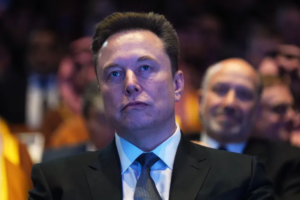
Elon Musk is on the verge of making financial history. With SpaceX hitting the public stock market, the controversial entrepreneur is positioned to become the very first trillionaire. Even before this massive market debut, Musk was already sitting comfortably at the top of the global wealth pyramid, holding a net worth of roughly $696 billion. However, his 42 percent stake in SpaceX pushes his fortune into entirely uncharted territory.
As SpaceX begins trading on the Nasdaq with a staggering trillion-dollar-plus valuation, the math behind Musk’s new economic status becomes almost impossible to grasp. To put it into perspective, international anti-poverty organizations note that if someone were to spend $1 million every single day, it would take nearly three millennia to burn through a trillion dollars. This financial milestone places Musk far ahead of contemporary tech peers like Google cofounder Larry Page, effectively tripling Page’s own massive fortune.

A New Era of “Robber Barons”?
To understand the sheer scale of this wealth, economic historians look back to the industrial titans of the 19th and early 20th centuries. Magnates like John Jacob Astor, Andrew Carnegie, and John D. Rockefeller controlled massive empires in real estate, steel, and oil. At their peaks, their fortunes represented anywhere from 0.5 percent to 1.5 percent of the total United States economy. As a trillionaire, Musk’s net worth commands roughly 3 percent of the US gross domestic product.
According to economic experts who study wealth across eras, another way to measure this power is through human labor. By analyzing how many workers a single fortune could theoretically employ, researchers suggest that Musk may well be the wealthiest private individual to ever exist, outmatching the pure economic leverage of past industrialists.
Yet, the parallels extend beyond just numbers. The tycoons of the Gilded Age were deeply polarizing figures, often despised by the public and labeled “Robber Barons” for their cutthroat business tactics and heavy-handed political corruption to protect their interests. Similarly, Musk has aggressively stepped into the political arena, using his massive social media platform, X, to champion specific ideologies and taking on prominent roles aimed at restructuring government operations.
The Philanthropy Divide
Despite these historical similarities, modern experts point out a glaring divergence in how these fortunes are used for the public good. The industrialists of the past, for all their ruthless business practices, pioneered modern, large-scale philanthropy. Andrew Carnegie famously argued in his “Gospel of Wealth” that the rich have a moral obligation to spend their fortunes improving society during their lifetimes, eventually giving away 90 percent of his money to build libraries, universities, and public museums.
In contrast, contemporary approaches to giving look quite different. While Musk previously signed the Giving Pledge, an initiative started by Bill Gates and Warren Buffett to encourage billionaires to donate the majority of their wealth, analysts note that the bulk of his charitable contributions remain closely tied to his own business interests or are funneled through private, donor-advised intermediary funds.
Will History Repeat Itself?
When the ultra-wealthy amassed unprecedented fortunes a century ago, it triggered widespread social unrest, labor protests, and political backlash. That friction ultimately forced the hands of lawmakers, leading to the creation of the federal income tax, anti-trust laws, and regulatory bodies like the Federal Trade Commission to rein in corporate monopolies.
Today, economists suggest that our political and economic systems are much more rigid and resistant to that kind of sweeping, bottom-up regulatory change. However, financial experts also warn that a trillion-dollar net worth on paper is far from permanent. Because Musk’s wealth is heavily tied to the stock market valuations of his companies, his historic status remains at the mercy of volatile market shifts, intense competition, and shifting economic realities.
Disclaimer: The information provided in this article is for informational, educational, and entertainment purposes only. It does not constitute financial, investment, legal, or professional advice. Market valuations, net worth estimates, and stock prices fluctuate rapidly and may change without notice. Always consult with a certified financial professional before making any investment decisions.