

The global job market has never been more accessible to internationally mobile professionals. Whether you are chasing a tax-free salary, a manageable visa process, an affordable cost of living, or simply a better quality of life outside your home country, 2026 offers a wider range of realistic options than most people realise.
But “best country to work in” means something different depending on what you are optimising for. The right answer for a corporate executive targeting maximum savings looks nothing like the right answer for a fresh graduate funding a year of travel, a remote worker looking for affordable European sunshine, or a teacher seeking a well-paid placement with housing included.
This guide breaks down the 10 strongest destinations for working abroad this year — what each country offers, who it genuinely suits, what it costs to live there, and what the trade-offs are. A comparison matrix at the end helps you match your priorities to the right destination quickly.
Before you commit to a country, understand the visa landscape. Our guide to the most accessible work visas in 2026 explains the fastest and most achievable pathways by visa type and profession.
1. New Zealand

Best for: Working holiday travellers, outdoor enthusiasts, and agricultural professionals
Average monthly cost of living: $2,200 to $2,800
Visa accessibility: Easy (streamlined for ages 18 to 35)
New Zealand is the benchmark destination for working holidays. Its Working Holiday Visa is processed almost entirely online, with approvals regularly coming through in under two weeks — a speed that few comparable countries match. For young adults between 18 and 35, this makes it one of the most frictionless entry points into international work experience anywhere in the world.
The economy runs heavily on seasonal labour. Agriculture, ecotourism, winter sports operations, and hospitality all hire internationally, and the short-term employment market is built around accommodating this. You can arrive, find work within days in the right season, and sustain yourself while exploring the country.
For professionals with long-term ambitions, New Zealand also maintains a “Green List” of high-priority occupations — primarily in healthcare, engineering, and technology — where residency pathways are fast-tracked and employer sponsorship is actively supported by the government.
The honest trade-off: The cost of living is higher than many working holiday travellers expect, particularly in Auckland. Salaries are competitive but do not match the highest earners in Australia or the UAE. New Zealand rewards lifestyle over financial maximisation.
2. The Netherlands

Best for: Tech professionals, academic researchers, and corporate expatriates
Average monthly cost of living: $2,400 to $3,200
Visa accessibility: Moderate
The Netherlands combines one of Europe’s most internationally connected corporate environments with a practical advantage most countries cannot offer: over 95% of the population speaks fluent English. For professionals who want to work in Europe without immediately needing a second language, this matters enormously.
Amsterdam and Rotterdam serve as regional headquarters for a significant number of global corporations spanning logistics, software, renewable energy, financial services, and life sciences. The country recruits international talent through its Highly Skilled Migrant visa, which is employer-sponsored and processed relatively quickly for qualifying roles.
The standout financial benefit is the 30% ruling — a tax arrangement that allows qualifying expatriates to receive 30% of their gross salary tax-free for a set period. For professionals on higher salaries, this is a meaningful financial advantage that significantly reduces the sting of the Netherlands’ otherwise elevated tax rates.
The honest trade-off: Amsterdam is expensive. Housing in particular has become a significant challenge for new arrivals, with rental markets extremely competitive. The 30% ruling has also been subject to legislative adjustments in recent years, so confirm current eligibility conditions before factoring it into your financial planning.
3. South Korea

Best for: English language educators and digital media professionals
Average monthly cost of living: $1,800 to $2,500
Visa accessibility: Easy to moderate
South Korea is one of the most financially rewarding destinations for TEFL-certified English speakers. The government-run EPIK (English Programme in Korea) places certified teachers in public schools nationwide, while a large network of private academies (hagwons) creates substantial additional demand across major cities.
What distinguishes South Korea’s teaching market from most others is the benefits structure. Standard contracts at reputable institutions typically include free furnished accommodation, return airfare, and a severance bonus paid at the end of the contract. Combined with a relatively modest cost of living compared to Western countries, this allows teachers to save aggressively while living well.
Beyond education, Seoul has become a genuine global hub for technology, gaming, and digital entertainment. For professionals with backgrounds in these sectors, South Korea’s corporate scene offers opportunities that extend well beyond teaching, particularly for those willing to engage with the local market and culture.
The honest trade-off: The hagwon sector is uneven in quality. Contract terms, workload, and management standards vary significantly between institutions. Researching specific employers through resources like Dave’s ESL Cafe and speaking with current or former employees before signing is strongly advisable.
4. Australia

Best for: Skilled professionals, marketing specialists, and working holiday travellers
Average monthly cost of living: $2,800 to $3,800
Visa accessibility: Moderate
Australia’s appeal is broad because its immigration system is deliberately tiered to serve different needs at the same time. The Working Holiday Visa (Subclass 417 and 462) opens the country to young adults seeking to fund extended travel through work in hospitality, agriculture, and marketing. Separately, a robust points-based permanent residency system targets mid-career professionals in fields facing documented labour shortages.
Healthcare workers, specialised engineers, IT professionals, and accountants find Australia particularly receptive in 2026, with employer sponsorship opportunities and salary benchmarks that compare favourably with other English-speaking destinations. Australia’s minimum wage is among the highest in the world, which creates a meaningful floor even for lower-skilled working holiday employment.
The workplace culture actively protects personal time. Weekend work commands penalty rates, annual leave entitlements are legally mandated, and the professional environment generally does not reward the kind of always-on work culture common in some other high-paying markets.
The honest trade-off: Sydney and Melbourne are expensive by any global measure. Professionals targeting maximum savings should evaluate whether Australian salaries, after tax and cost of living, actually deliver a better financial outcome than lower-cost destinations. In many cases they do — but the calculation is worth doing before committing.
5. Germany

Best for: Engineers, IT specialists, and corporate career builders
Average monthly cost of living: $2,000 to $2,800
Visa accessibility: Moderate
Germany is the economic anchor of Europe, and its labour market reflects that scale. The automotive, aerospace, manufacturing, and software sectors employ internationally at volume, and the country has made deliberate legislative changes to ease the immigration process for skilled workers.
The most significant recent development is the Chancenkarte (Opportunity Card) — a points-based system that allows qualified professionals to enter Germany specifically to look for a job, without a confirmed offer in hand. This removes one of the traditional barriers to skilled migration and gives internationally mobile workers a practical way to explore the German market from within the country.
English is widely spoken in corporate environments in Berlin, Munich, Frankfurt, and Hamburg. For daily life and long-term integration, however, German language skills matter. Employers in technical fields increasingly expect at least conversational German outside of fully international team environments.
The honest trade-off: Germany’s bureaucratic processes are thorough and occasionally slow. Tax rates are high, and the cost of living in Munich in particular has risen sharply. The compensation is genuinely one of the best work-life structures in the world — the average working week is among the shortest in any major economy, and paid vacation entitlements are legally protected and substantial.
6. Canada

Best for: Long-term immigration, tech workers, and families
Average monthly cost of living: $2,500 to $3,500
Visa accessibility: Moderate
Canada’s immigration system is built around permanence. Unlike countries that offer temporary work arrangements or provisional visas, Canada’s pathways — particularly Express Entry and the Provincial Nominee Programs (PNPs) — are explicitly designed to lead to permanent residency and eventually citizenship. For professionals thinking beyond a two-year assignment and toward a long-term home, this makes Canada structurally different from most other options on this list.
The country is actively seeking skilled workers in technology, healthcare, and the trades. Toronto and Vancouver offer highly multicultural corporate environments with strong international community networks. Calgary and other emerging hubs present a more affordable cost of entry, with strong demand in energy, engineering, and construction sectors.
The workplace culture mirrors US corporate structures in many ways but with a notably different emphasis on personal time, parental leave, and work-life boundaries that are better protected by both law and professional norms.
The honest trade-off: Vancouver and Toronto have some of the most expensive housing markets in the world. Immigration processing times through Express Entry can be lengthy and vary significantly depending on occupation and points scores. Canada rewards patience and long-term thinking more than it rewards speed.
7. United Arab Emirates
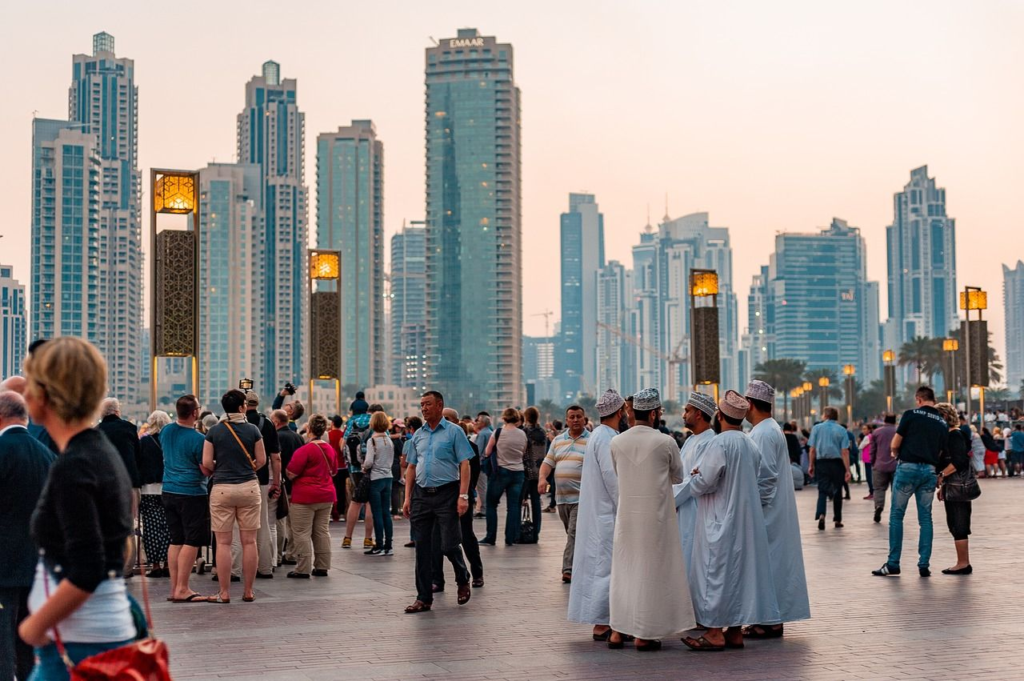
Best for: High earners, corporate executives, and aggressive savers
Average monthly cost of living: $2,500 to $4,000
Visa accessibility: Easy
The UAE’s singular financial advantage is its personal income tax rate: zero. What you earn is what you keep, with no income tax deducted regardless of salary level. For professionals in senior corporate roles, this distinction alone can make the UAE more financially rewarding than higher-salary markets in Europe or North America where tax takes 30% to 50% of gross earnings.
Dubai and Abu Dhabi have developed mature, internationally oriented job markets across real estate, financial technology, construction management, healthcare, and luxury hospitality. The introduction of Green Visas and 10-year Golden Visas has significantly reduced the historical dependence on a single employer for residency — a change that gives professionals considerably more flexibility than the traditional sponsorship model allowed.
The honest trade-off: The UAE has a specific cultural and social framework that requires genuine adaptation, not just awareness. Summers are extreme, with temperatures regularly exceeding 45 degrees Celsius making outdoor activity genuinely difficult for months at a time. Lifestyle freedoms that are standard in Western countries are restricted. Professionals who thrive here typically have a clear financial objective and a high tolerance for a structured social environment.
8. Denmark
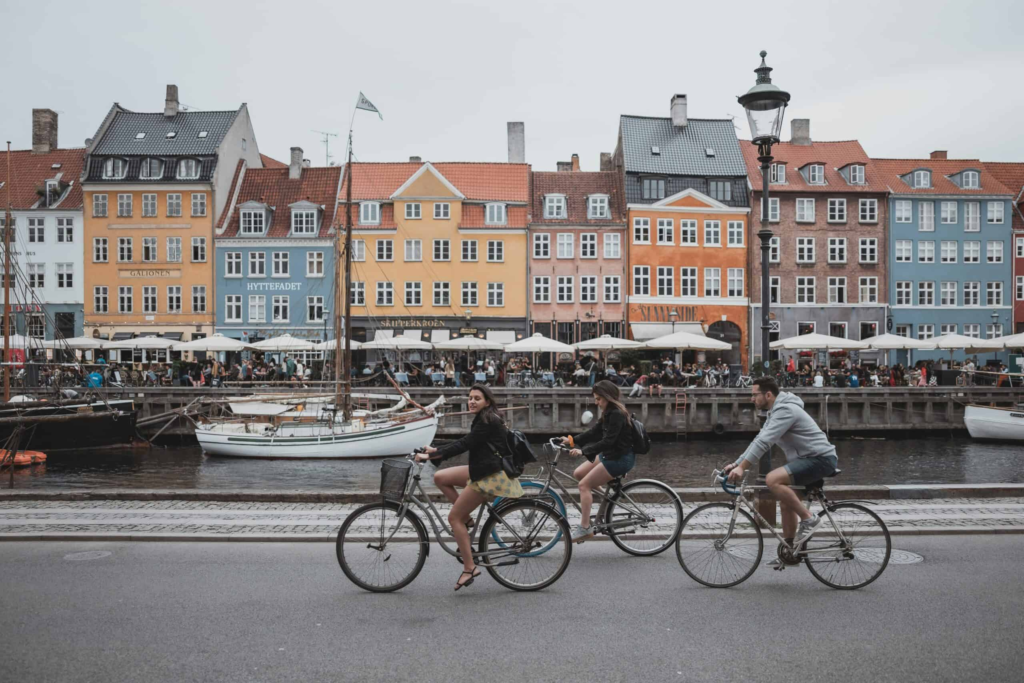
Best for: Work-life balance, green energy professionals, and life sciences specialists
Average monthly cost of living: $3,000 to $4,000
Visa accessibility: Moderate
Denmark’s professional culture is built around a simple premise: output matters more than hours. The standard Danish working week is 37 hours. Staying significantly beyond that is unusual and in many workplaces is read as a signal of poor efficiency rather than dedication. This creates an environment that is genuinely different from the always-on cultures of many English-speaking corporate markets.
The country tops global rankings for workplace satisfaction and personal happiness consistently, and the structure supports this. Heavily subsidised childcare, universal healthcare, and one of the most robust social safety nets in the world mean that disposable income goes further than raw salary figures might suggest.
For professionals in biotech, cleantech, green engineering, and life sciences, Denmark offers a high concentration of leading employers in a relatively compact, English-accessible environment. Copenhagen is increasingly a European hub for sustainability-focused businesses.
The honest trade-off: Denmark is expensive, and personal income tax rates are among the highest in the world — top marginal rates exceed 55%. Salaries are calibrated to match, but the net financial outcome is not what you would get in a low-tax jurisdiction. Denmark makes sense if your priority is quality of life rather than wealth accumulation.
9. Portugal

Best for: Digital nomads, remote workers, and tech entrepreneurs
Average monthly cost of living: $1,500 to $2,200
Visa accessibility: Easy
Portugal has established itself as the leading European destination for remote workers and digital nomads, and the infrastructure has evolved to match the reputation. Lisbon, Porto, and the Algarve coast have dense networks of coworking spaces, established expatriate communities, and reliable high-speed internet that reaches well beyond city centres.
The D8 Digital Nomad Visa provides a formal residency pathway for remote employees and freelancers who can demonstrate a stable monthly income (the threshold is approximately $3,500 per month, though this figure is reviewed periodically). After five years of legal residency, a path to permanent residency and citizenship opens.
Compared to its Western European neighbours, Portugal’s cost of living remains relatively accessible — though Lisbon in particular has experienced significant rent increases over the past five years as international interest has grown. Regional towns and the Algarve offer considerably lower overheads while maintaining strong connectivity and quality of life.
The honest trade-off: Portugal’s affordability advantage is eroding in the most popular cities. Professionals who arrived in Lisbon five years ago are paying very different rents from those arriving today. Exploring secondary cities or regional towns early in your research pays off.
10. Cambodia

Best for: Budget-conscious travellers, digital nomads on modest incomes, and ESL teachers
Average monthly cost of living: $800 to $1,500
Visa accessibility: Very easy
Cambodia offers the lowest cost of entry on this list, both financially and administratively. The business visa is straightforward to obtain and renew, and the bureaucratic process compares favourably with every other country in the region. In cities like Phnom Penh and Siem Reap, a modern, well-furnished apartment can be rented for $300 to $500 per month — a figure that makes Cambodia genuinely transformative for digital workers on modest or mid-range incomes.
Internet infrastructure has improved substantially over the past few years, making reliable remote work a practical reality rather than an aspiration. The local economy offers employment in English language instruction, hospitality consulting, and NGO operations for those seeking local income rather than remote work.
The honest trade-off: Cambodia’s low cost of living reflects the stage of its economic development. Healthcare infrastructure is limited, and serious medical issues typically require evacuation to Bangkok or Singapore. Political stability, while improved, warrants ongoing attention. Cambodia suits professionals who have weighed these trade-offs deliberately and are optimising aggressively for cost.
How to Choose: A Priority-Based Comparison
Your ideal destination depends on what you are actually optimising for. Use this framework to narrow your options.
If your priority is maximising net income: The UAE is the clear leader due to zero personal income tax. Australia ranks strongly for high base salaries and a strong minimum wage floor.
If your priority is work-life balance and personal time: Denmark (37-hour workweek, heavily protected leave entitlements) and Germany (low average working hours, mandatory vacation) are the top choices in the developed world.
If your priority is the simplest, fastest visa process: New Zealand for working holiday applicants aged 18 to 35. Cambodia for immediate, low-barrier entry regardless of age or professional background.
If your priority is keeping monthly costs below $2,000: Cambodia offers the most aggressive affordability. Portugal remains the most accessible European option at the lower end of its cost range, particularly outside Lisbon.
If your priority is a long-term home and permanent residency: Canada’s Express Entry and PNP systems are built specifically for this. Australia’s points-based PR pathways are similarly well-structured for mid-career professionals.
If your priority is career growth in a global corporate environment: The Netherlands, Germany, and the UAE offer the strongest concentration of multinational employers with genuinely international professional cultures.
Frequently Asked Questions
Do I need a job offer before moving abroad in 2026? It depends on the country and visa type. Germany’s Opportunity Card, Portugal’s Digital Nomad Visa, and New Zealand’s Working Holiday Visa all allow you to enter without a confirmed job offer. Australia and Canada’s skilled migration systems generally require at least an Expression of Interest before a visa invitation is issued. The UAE’s Green Visa also allows entry without employer sponsorship in qualifying cases.
Which country is easiest for English speakers with no second language? The Netherlands (95%+ English fluency), Australia, New Zealand, Canada, and Cambodia all function comfortably in English at a working level. South Korea and Germany require local language skills for daily integration, though English suffices in corporate environments.
Which destination gives the best savings potential? The UAE offers the highest net savings for high earners due to zero income tax. For professionals on mid-range salaries, Australia and the Netherlands offer strong earnings relative to the cost of living. For remote workers on international salaries, Portugal and Cambodia offer the greatest savings margin due to low local costs.
Is it realistic to work abroad with a family? Yes, and several countries on this list are particularly family-friendly. Canada offers excellent public schooling and multicultural environments. Denmark provides heavily subsidised childcare and parental leave at levels most countries do not approach. Germany’s social infrastructure is strong. The UAE works well for families in terms of expatriate schooling options, though international school fees are a significant cost to budget for.
How important is it to understand a country’s tax system before moving? Critically important and consistently underestimated. A high gross salary in a high-tax country may deliver less take-home pay than a lower salary in a low-tax environment. Beyond income tax, consider social contributions, potential home-country tax obligations if you remain a tax resident there, and the tax treatment of remote income in your destination country. Consulting a tax professional with cross-border expertise before relocating is money well spent.
What should I research beyond salary and cost of living? Healthcare access and quality, pension or retirement contribution requirements, the process for bringing a spouse or dependants, language requirements for long-term residency, and the country’s political and economic stability over a five to ten year horizon. The countries that look best on a one-year basis are not always the same ones that look best on a ten-year basis.
As has been shown
The best place to work abroad in 2026 is not the country with the highest salary or the cheapest rent in isolation; it is the one where your skills are in demand, your visa is achievable, your income goes far enough, and the lifestyle fits what you are actually trying to build. Every country on this list works well for the right person. The decisions that tend to go wrong are the ones made on one variable alone.
Research your shortlist thoroughly, talk to people already living there, and verify current visa and tax conditions before making any commitments. The groundwork you lay before you leave is what determines whether your time abroad becomes an asset or a setback.



[…] Australia is one of the most in-demand destinations for skilled professionals worldwide. See how it compares to other leading options in our guide to the top 10 countries to work abroad in 2026. […]
[…] you are still evaluating where to focus your international career search, exploring the top countries to work abroad in 2026 may help broaden your options beyond the U.S. job […]