
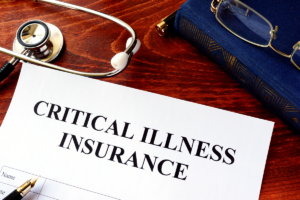
A cancer diagnosis, a heart attack, or a stroke does not just create a medical crisis. It creates a financial one too.
Even with solid health insurance, a serious illness can leave you facing steep deductibles, out-of-pocket maximums, and a stream of expenses your primary coverage was never designed to handle: mortgage payments while you are too sick to work, childcare costs, utility bills, and sometimes experimental or out-of-network treatments that standard insurance refuses to touch. According to Bankrate’s 2026 Annual Emergency Savings Report, a significant share of Americans do not have savings available to cover even a $1,000 unexpected expense. A prolonged medical crisis runs into the tens of thousands, which goes a long way toward explaining why medical bills remain a leading driver of personal bankruptcy filings in the United States.
Critical illness insurance exists to close that gap. It will not replace your health insurance or your disability coverage, but it plugs the holes in both, delivering a lump sum of cash directly to you when a covered diagnosis arrives. What you do with that money is entirely your call.
This guide explains how the product works, what it covers, what it excludes, what it costs, and how to decide whether it belongs in your financial plan.
What Critical Illness Insurance Actually Is
Critical illness insurance is a supplemental policy, not a replacement for your primary health coverage. When you are diagnosed with a condition listed in your policy, the insurer pays you a one-time, lump-sum cash benefit. The check comes to you personally, not to a hospital or a physician’s billing department.
That distinction matters more than it might first appear. Your primary health insurance reimburses medical providers for the care they deliver. Critical illness insurance hands you money to use however your situation demands, whether that is covering your deductible, paying your rent while you are in recovery, financing a second medical opinion, or covering travel costs if treatment requires you to go out of state.
The U.S. critical illness insurance market was valued at approximately $112 billion in 2025 and is projected to more than double by 2035, reflecting growing consumer awareness of the coverage gaps that standard health plans leave behind.
What Does It Cover?
There is no universal list of covered conditions. Every insurer sets its own terms, and the specific language in your policy document governs what qualifies for a payout, not the sales materials or the name of a condition.
That said, most standard policies provide financial protection for the following:
- Cancer (life-threatening types, with specific exclusions for early-stage or non-invasive forms)
- Heart attack
- Stroke
- Kidney failure requiring dialysis
- Major organ transplant
- Coronary artery bypass surgery or angioplasty
- Coma
- Paralysis
- Alzheimer’s disease
- Benign brain tumor
Some policies go further and include conditions such as multiple sclerosis, Parkinson’s disease, loss of limbs, or chronic respiratory failure. These extended lists typically come with higher premiums or require an additional rider.
What You Can Spend the Payout On
Because the benefit is paid directly to you, there are no restrictions on how you use it. Common uses include:
- Health insurance deductibles, copayments, and coinsurance
- Out-of-network treatment costs
- Experimental or alternative therapies not covered by standard insurance
- Mortgage or rent payments during recovery
- Utility bills, groceries, and other household expenses
- Childcare costs while you are unable to work
- Travel and accommodation for treatment at a specialist center
- Home modifications, if your condition requires them
What It Does Not Cover: Read This Carefully
This is the section most buyers skip, and it is also where the most unpleasant surprises tend to occur.
Pre-existing conditions. If you have been previously diagnosed with or received treatment for a condition before your policy takes effect, claims related to that condition are almost always excluded. Some insurers apply a lookback window of two to five years; others exclude pre-existing conditions permanently. Read the language precisely.
The 90-day waiting period. Most critical illness policies include a waiting period, typically 90 days from the date coverage begins. Any condition diagnosed within that window is not covered. This is standard across the industry.
Severity thresholds. Insurance companies define covered conditions specifically, and the definition of severity matters enormously. A minor cardiac event may not meet a policy’s definition of a heart attack. Early-stage or in-situ cancer may receive only partial benefits or no benefit at all. Slow-growing prostate cancers at early stages are frequently excluded. Skin cancers such as basal cell or squamous cell carcinoma are often excluded entirely. The diagnosis you receive must match the specific clinical definition in your policy document.
Survival periods. Many policies require you to survive for a minimum period following diagnosis, often 14 to 30 days, before a benefit is paid. If a policyholder dies within that window, the claim may not be honoured.
Lifestyle-related exclusions. Conditions resulting directly from alcohol or substance use, self-inflicted injury, or participation in criminal activity are excluded universally. Some policies also exclude conditions arising from participation in active military service or exposure to nuclear, biological, or chemical events.
Claim limits. Most policies limit the number of claims you can make. If you have already received a full payout for one condition, you may not be able to claim again for a second condition, or the available benefit may be reduced. Some policies offer a benefit suspension period between claims rather than an outright ban.
The practical advice here is straightforward: do not rely on a summary brochure or a sales conversation to understand what your policy covers. Read the actual policy document, pay particular attention to the definitions section, and ask a licensed insurance professional to clarify anything that is ambiguous before you sign.
Pause: A Few Recaps
- Critical illness insurance pays a one-time, lump-sum cash benefit directly to you upon diagnosis of a covered condition. The money goes to you, not to a medical provider, and you decide how to spend it.
- It is a supplemental product, not a substitute for primary health insurance or long-term disability coverage.
- Covered conditions vary by insurer. Always read the clinical definitions in your policy document, not just the list of condition names.
- Common exclusions include pre-existing conditions, diagnoses within the 90-day waiting period, conditions that do not meet severity thresholds, and lifestyle-related causes such as substance use.
- Premiums are most affordable when purchased young and are significantly higher for nicotine users.
- Individual policies range from $5,000 to $75,000 in standard benefits; group policies through employers may offer simpler enrollment and lower rates.
- Always disclose your full medical history accurately on the application. Concealment, even accidental, is the most common reason legitimate claims are denied.
- The product is most valuable for people with family histories of serious illness, those on high-deductible health plans, self-employed individuals, and primary earners without a financial cushion large enough to absorb a prolonged health crisis.
How to Buy a Policy
Critical illness insurance is available through two main channels, each with its own trade-offs.
Individual Policies
Individual policies are purchased directly from health or life insurance companies. Many carriers allow you to add critical illness coverage as an optional rider on an existing term life policy, which can simplify administration and sometimes reduce overall cost.
Underwriting: Most individual applications require you to answer a health questionnaire. A full medical exam is generally only required if you are applying for a very high benefit amount.
Benefit limits: Individual payouts typically range from $5,000 to $75,000 at standard coverage levels, though some premium policies extend lifetime maximums to $500,000.
Age rules: Individual policies are usually guaranteed renewable for life if purchased before age 70. After that threshold, the available benefit amount commonly drops by 50%, and some insurers stop issuing new policies altogether.
Age-reduction schedules: Some policies reduce your benefit automatically as you age, regardless of when you purchased coverage. This is a critical detail to check before buying.
Group Policies Through an Employer
Many employers offer critical illness insurance alongside high-deductible health plans or as a voluntary benefits option during open enrollment.
Approval: Group plans rarely require a medical exam or health screening. Enrollment is typically guaranteed for all active employees, regardless of health status.
Cost: Employers sometimes fund the coverage entirely. In other cases, they pass along the benefit of a discounted group rate, meaning your premium is lower than you would pay in the individual market.
Portability: Most group plans allow you to continue coverage if you leave your employer, provided you take over the full premium payment. Confirm the portability terms before relying on this option as part of your financial planning.
What Does It Cost?
Your monthly premium depends on the level of financial risk you represent to the insurer. The primary factors are your age, the benefit amount you choose, your gender, your geographic location, and whether you use nicotine products.
Younger buyers pay the least. Nicotine use can effectively double your monthly cost in some age brackets.
Estimated Monthly Premiums: Female (Eugene, OR)
| Age | Nicotine Use | $5,000 Benefit | $25,000 Benefit | $50,000 Benefit | $75,000 Benefit |
|---|---|---|---|---|---|
| 25 | No | $4.77 | $10.16 | $18.14 | $26.13 |
| 25 | Yes | $5.16 | $17.08 | $32.98 | $47.88 |
| 35 | No | $5.34 | $18.02 | $34.86 | $50.70 |
| 35 | Yes | $8.01 | $31.35 | $61.52 | $90.69 |
| 45 | No | $8.68 | $30.71 | $57.25 | $85.79 |
| 45 | Yes | $12.29 | $53.75 | $103.33 | $154.90 |
| 55 | No | $11.35 | $48.05 | $94.93 | $140.81 |
| 55 | Yes | $19.12 | $87.91 | $172.66 | $256.40 |
Estimated Monthly Premiums: Male (Savannah, GA)
| Age | Nicotine Use | $5,000 Benefit | $25,000 Benefit | $50,000 Benefit | $75,000 Benefit |
|---|---|---|---|---|---|
| 25 | No | $4.07 | $12.64 | $21.72 | $31.56 |
| 25 | Yes | $6.57 | $19.17 | $36.16 | $53.16 |
| 35 | No | $6.03 | $21.46 | $50.01 | $60.04 |
| 35 | Yes | $9.21 | $37.36 | $73.55 | $108.74 |
| 45 | No | $10.76 | $25.94 | $78.07 | $116.01 |
| 45 | Yes | $16.10 | $72.82 | $141.47 | $211.12 |
| 55 | No | $17.78 | $75.20 | $148.22 | $221.25 |
| 55 | Yes | $29.24 | $138.52 | $273.86 | $408.21 |
These figures are illustrative estimates. Your actual premium will vary based on your insurer, specific health history, state of residence, and the policy terms you select.
Optional Riders Worth Knowing About
Many insurers allow you to customize a policy with add-on riders. Common options include:
Return of premium rider: If you reach the end of your policy term without making a claim, this rider refunds a portion of the premiums you paid. It adds cost upfront but reduces the financial sting of never needing to use the policy.
Waiver of premium rider: If you become totally disabled, this rider suspends your premium obligations while keeping your coverage active.
Children’s coverage rider: Extends a portion of the critical illness benefit to cover a covered diagnosis in your dependent children.
Recurrence benefit: Allows you to make a second claim for the same condition after a defined recovery and waiting period, or for a different covered condition after a benefit suspension period.
Each of these riders adds to your monthly premium. Evaluate whether the added cost makes sense against your specific situation and risk tolerance.
Common Mistakes to Avoid
Buying based on the headline benefit without reading the definitions. A policy that covers “cancer” sounds comprehensive until you discover it excludes the specific type of cancer you develop. Always read the clinical definitions for every listed condition.
Underestimating how much coverage you actually need. A $10,000 payout sounds significant until you factor in a six-month recovery, a high-deductible health plan, and a mortgage. Calculate your real financial exposure before choosing a benefit amount.
Ignoring the waiting period. Some buyers assume coverage is immediate. Most policies will not pay for a condition diagnosed within the first 90 days of the policy’s effective date.
Failing to disclose your full medical history on the application. If an insurer later discovers that you withheld relevant medical information, whether deliberately or accidentally, it may deny your claim entirely, even if you have been paying premiums faithfully for years. Disclose everything.
Treating it as a substitute for disability insurance. Critical illness insurance pays a one-time lump sum. Long-term disability insurance replaces a portion of your income continuously for as long as you remain unable to work. If a serious illness leaves you out of the workforce for two years, a $25,000 lump sum covers a fraction of the financial gap. The two products serve different purposes and, for many people, are both worth having.
Buying through an employer without checking portability terms. If your group plan is not portable and you leave your job, you could lose coverage at exactly the time in your life when your health profile makes individual coverage expensive or difficult to obtain.
Who Should Seriously Consider This Coverage?
Critical illness insurance is not the right product for everyone, but it is a genuinely useful financial tool for specific groups:
- People with a personal or family history of cancer, heart disease, or stroke, conditions that create a statistically elevated risk
- Anyone enrolled in a high-deductible health plan where a single serious illness could trigger tens of thousands of dollars in out-of-pocket costs before coverage kicks in
- Self-employed individuals or freelancers without access to paid sick leave, disability coverage, or an employer safety net
- Primary earners in a household where a prolonged absence from work would immediately threaten the family’s financial stability
- Anyone whose savings would not cover three to six months of expenses during a recovery period
If you already carry strong disability insurance and have substantial liquid savings, the additional layer that critical illness insurance provides may be less critical. But for most households, the coverage gap it fills is real, and the premiums at younger ages are low enough that the cost-benefit calculation is straightforward.
For broader context on how critical illness coverage fits within a complete personal protection strategy, it is worth understanding the full landscape of life insurance options available in the USA before committing to any supplemental policy.
Frequently Asked Questions
Is the payout from critical illness insurance taxable? In most cases, no. Lump-sum benefits paid directly to you from a personally purchased critical illness policy are generally not considered taxable income by the IRS. However, if your employer paid the premiums as part of a group plan, the benefit may be treated differently. Consult a tax professional for guidance specific to your situation.
Does critical illness insurance pay out if I survive? Yes. This is a key distinction from life insurance. Critical illness insurance pays on diagnosis of a covered condition while you are alive. You do not need to die for the benefit to trigger.
Can I have both critical illness insurance and disability insurance? Yes, and for many people, both make sense. Disability insurance replaces a percentage of your income regularly as long as you remain unable to work. Critical illness insurance provides a one-time lump sum on diagnosis. They address different financial problems and complement each other rather than duplicate coverage.
What happens if I am diagnosed with a condition not on the covered list? You will not receive a benefit for that condition. This is one of the most important reasons to read your policy carefully before purchasing. If a specific condition runs in your family and is not on the insurer’s covered list, this policy may not provide the protection you assume it does.
Can I be denied a claim even if I have been paying premiums? Yes. Common reasons for denial include a diagnosis within the waiting period, a condition that does not meet the policy’s specific severity definition, a pre-existing condition that was not disclosed, or a condition falling under one of the policy’s stated exclusions. Being thorough and accurate on your application is the most reliable way to protect your claim.
What is the difference between a first-diagnosis policy and a first-event policy? A first-diagnosis policy pays as soon as a covered condition is confirmed by a physician. A first-event policy may require a specific clinical event, such as a hospitalization or a surgical procedure, in addition to a diagnosis. Most U.S. consumer policies are first-diagnosis products, but check your policy language to confirm.
Does critical illness insurance cover mental health conditions? Generally no. Standard policies cover physical critical illnesses. Mental health conditions, including severe depression or anxiety disorders, are almost universally excluded from critical illness coverage.
What happens if my condition recurs? Recurrence benefits vary significantly by policy. Some insurers allow a second claim for the same condition after a defined benefit suspension period of typically 12 months. Others limit total payouts to a single lifetime claim. If recurrence coverage matters to you, confirm the policy’s position explicitly before purchasing.
A serious illness is disruptive enough without the added weight of financial instability. Critical illness insurance does not pretend to make a diagnosis painless, but it does provide one concrete thing at an incredibly difficult moment: money in your hands, ready to be directed wherever the crisis demands.
The product works best as part of a layered financial protection strategy that also includes robust primary health coverage, a meaningful emergency fund, and ideally some form of disability income protection. On its own, a critical illness policy addresses a specific gap that health insurance consistently leaves open, and for many Americans, that gap is large enough to be genuinely dangerous.
Buy it with clear eyes, read the definitions carefully, and disclose your health history honestly. The peace of mind it provides is only as solid as the policy you actually understand



[…] Consider critical illness insurance as part of your financial resilience plan. A serious health event before retirement age can derail even well-structured savings plans. Understanding your full financial safety net matters. Read more about critical illness insurance here. […]
[…] If you want a deeper look at how this product works, what the exclusions are, how premiums compare across age groups and benefit levels, and how to decide whether it belongs in your financial plan, the full breakdown is here: Critical Illness Insurance: What Is It? Who Needs It? […]
[…] reviewing the policy terms carefully before purchasing is essential. You may also want to consider critical illness insurance as an additional layer of financial protection for serious […]